Must-read before Chin Augmentation! Goretex? Camella? Artificial bone? Material selection comparison.

Chin Augmentation involves inserting a material into the surface of the chin bone to increase its volume and shape. It's typically suitable for individuals with short or slightly receding chins, aiming to lengthen the chin and create a more balanced facial appearance. Since Chin Augmentation is an invasive procedure, requiring the placement of an implant, the choice of implant is crucial. What implants are available, and what are their characteristics?
How do I choose the right chin implant material for myself?
In addition to the hospital and physician's expertise, the material of the implant also needs to be carefully selected. There are many types of materials on the market, such as silicone, Gore-Tex, Camellia, artificial bone, etc. Choosing the right material for yourself is very important. You can start from two aspects. The first is the stability and effectiveness of the implant, which is related to the material itself.
Secondly, the shape and feel of the implant should meet your needs. For example, some implants that are already large may not be suitable for people with a wide or upturned chin, as this could make their chin look too wide after implantation. Choosing the right chin implant requires discussion and evaluation with an experienced and professional plastic surgeon.

What materials are available for chin implants?
🔸Silicone (silicone)
advantage:
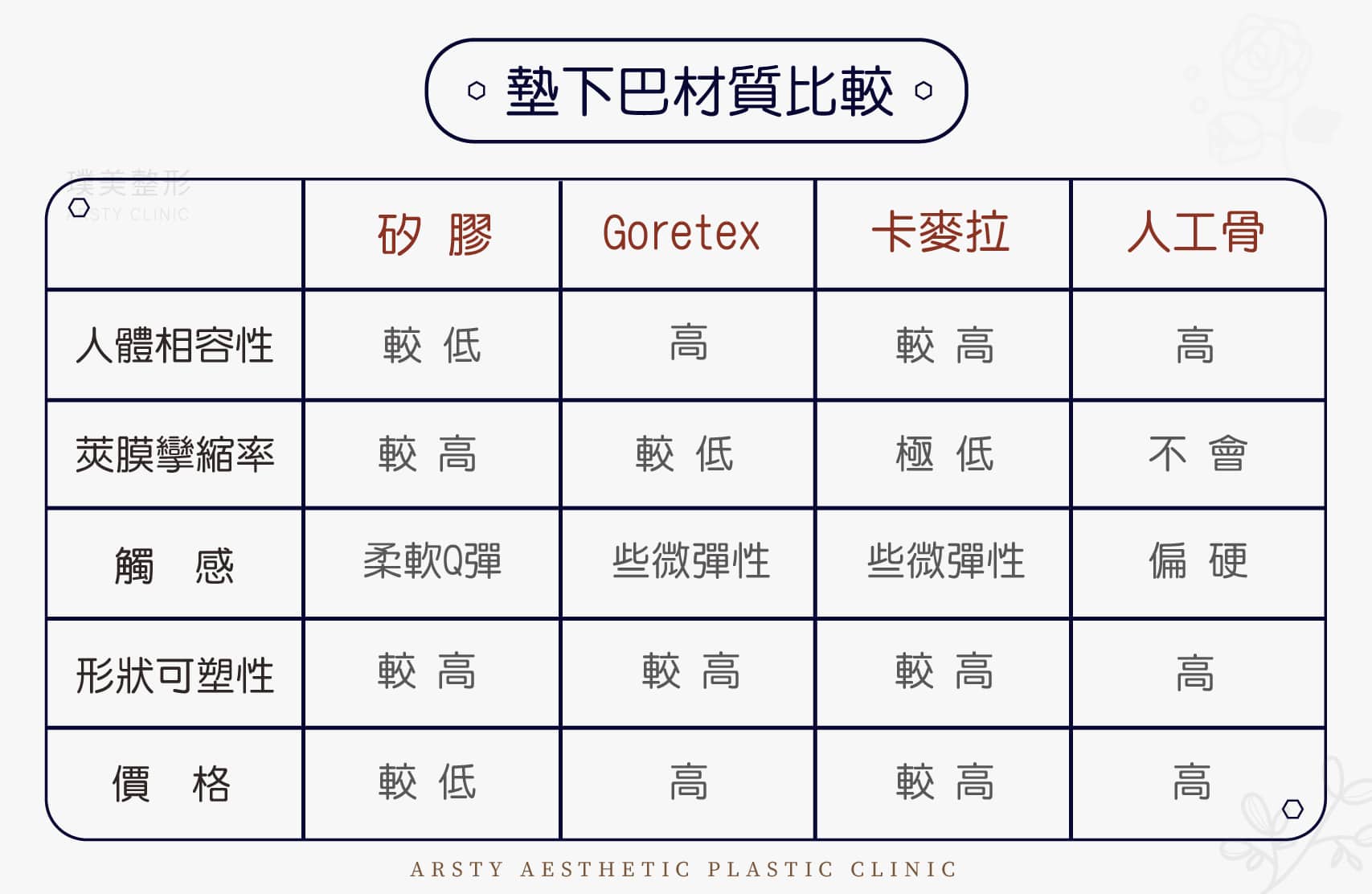
Silicone is widely used and commonly used in cosmetic surgery. This material is stable and provides good support in human tissue, and it is also one of the more affordable materials used in chin implants.
shortcoming:
Due to its shape, if a major chin reshaping surgery is required, the chin may appear overly pointed and narrow post-surgery, with a somewhat artificial shape. Additionally, the smooth surface of silicone makes it more prone to displacement post-surgery. Furthermore, in some cases, implanted silicone has been found to compress the chin bone, causing bone erosion and depressions.

🔸Goretex (ePTFE-Expended Polytetrafluoroethylene)
advantage:
You can think of Gore-Tex as a very dense sponge structure covered with tiny pores. Studies have found that blood vessels and tissue cells in the human body can grow into it.The pores of Goretex are highly biocompatible and stable, making it less likely to cause problems such as capsule or contracture after surgery.
In addition, in terms of shape, the surgery can be customized to individual circumstances, so different shape designs can be made for different parts of the face and different characteristics of each person.
shortcoming:
Goretex has a strong structure and high stability, but its price is relatively high.

🔸Chimera & Chimera 2nd Generation
advantage:
卡麥拉算是矽膠+Goretex的結合,希望取其優點,在矽膠外上面接合一層Goretex,有矽膠的支撐性,也有Goretex表面具有孔洞的特點,材質軟硬度符合需要,整體來說,卡麥拉的支撐性高、穩定度高、不易有莢膜位移,也常常用於Augmentation Rhinoplasty整形中,是臉部填充中非常常見的材質之一。
Disadvantages: If a second surgery is required to remove the implanted carmela gel, there is a possibility that Goretex may separate from the silicone, leaving Goretex residue.

🔸Artificial bone (Medpor)
advantage:
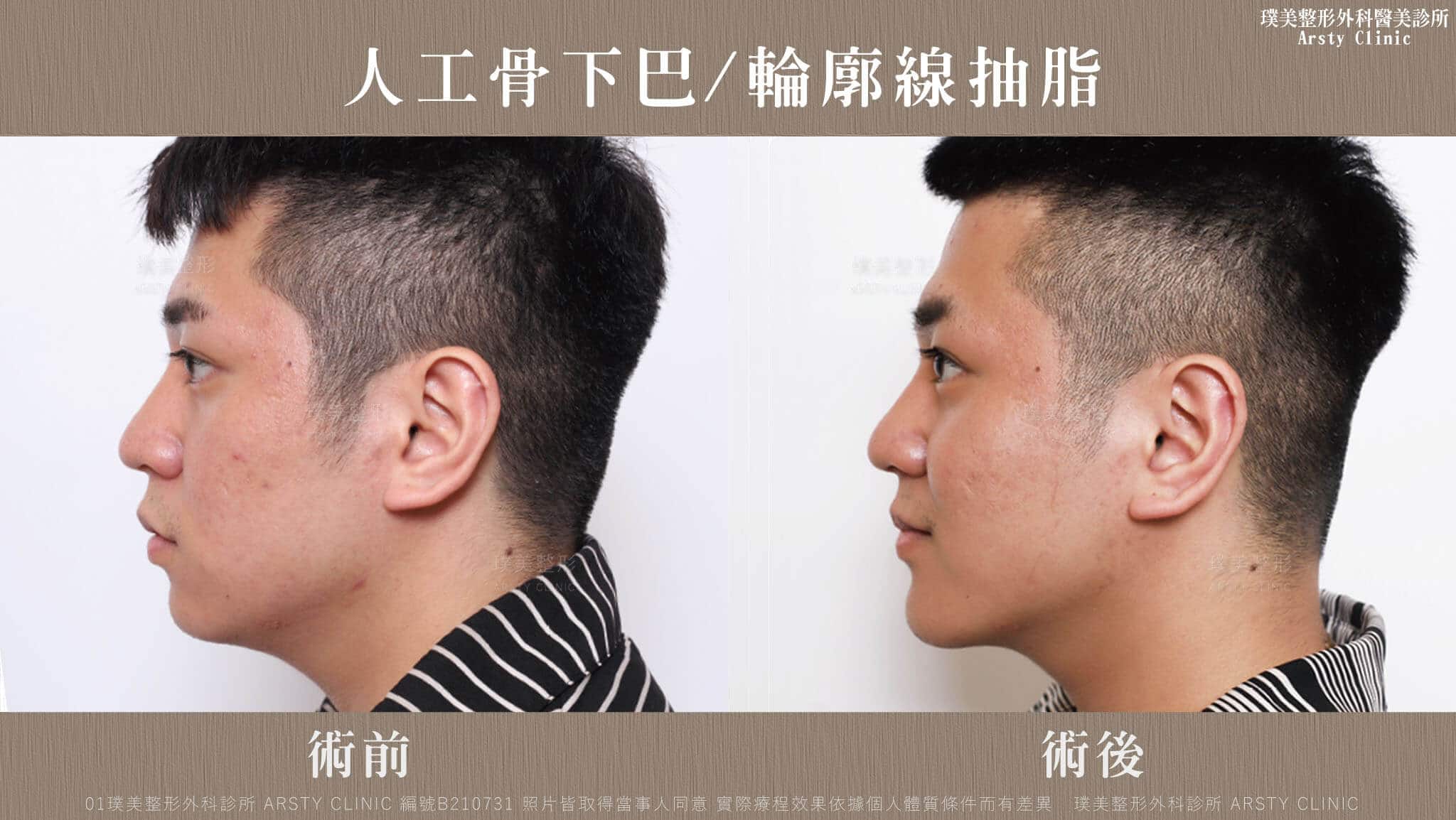
Artificial bone has a porous, three-dimensional structure made of polyethylene, making it harder than silicone, thus suitable as a replacement for facial bone tissue. Research has shown that tissue can grow into the material, resulting in high biocompatibility and a low risk of capsule formation post-surgery. Regarding volume, artificial bone is designed to be more substantial than other chin implants, making it suitable for situations requiring adjustment or expansion, such as a significantly receding chin.
shortcoming:
Artificial bone is relatively large, which is quite suitable for people who need to make significant changes. However, if it is not properly sculpted and shaped during surgery, it may make the chin appear wider after implantation. This is especially true for people whose chins are already relatively flat and wide. In such cases, more attention should be paid to the overall shape when using artificial bone.
🔸Next-generation artificial bone (Supor)
Like artificial bone, it has a porous three-dimensional structure of polyethylene. The material is stable and does not easily form pods. Overall, it has good support and a stable structure. Unlike previous generations of artificial bone, Medpor requires high temperature to be shaped, but Supor has increased its plasticity at room temperature because it has undergone different processes. Therefore, it is easier to shape it according to the face shape during surgery, and the overall curved surface is easier to fit the facial bones.

Chin pad material comparison
Chin augmentation recommended cases