Labiaplasty Surgery Q&A [Plastic Surgery - Dr. Hsin-Yu Chen]
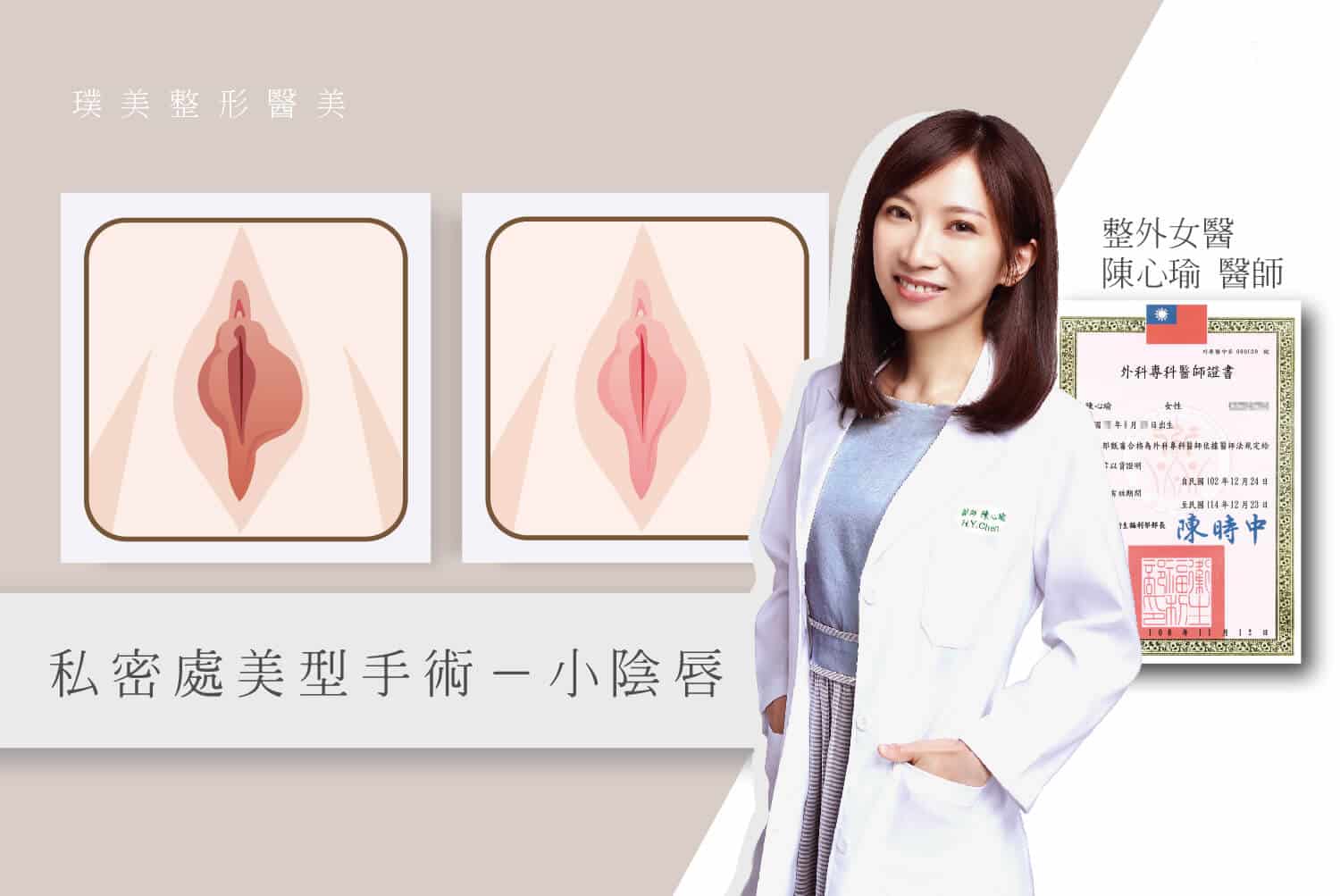
Labiaplasty
Today I want to share a topic that many people are shy about, but which is actually very important:Intimate area plastic surgeryMost women don't actually have the opportunity to properly observe their private parts, usually only thinking about their existence when they experience discomfort. However, in Western culture, the health and beauty of the private parts are already widely accepted concepts, so what do you think? If you've been taking good care of "her," then please continue, because "she" will always be there for you; if not, you can take this opportunity to learn more and answer some difficult-to-discuss questions.
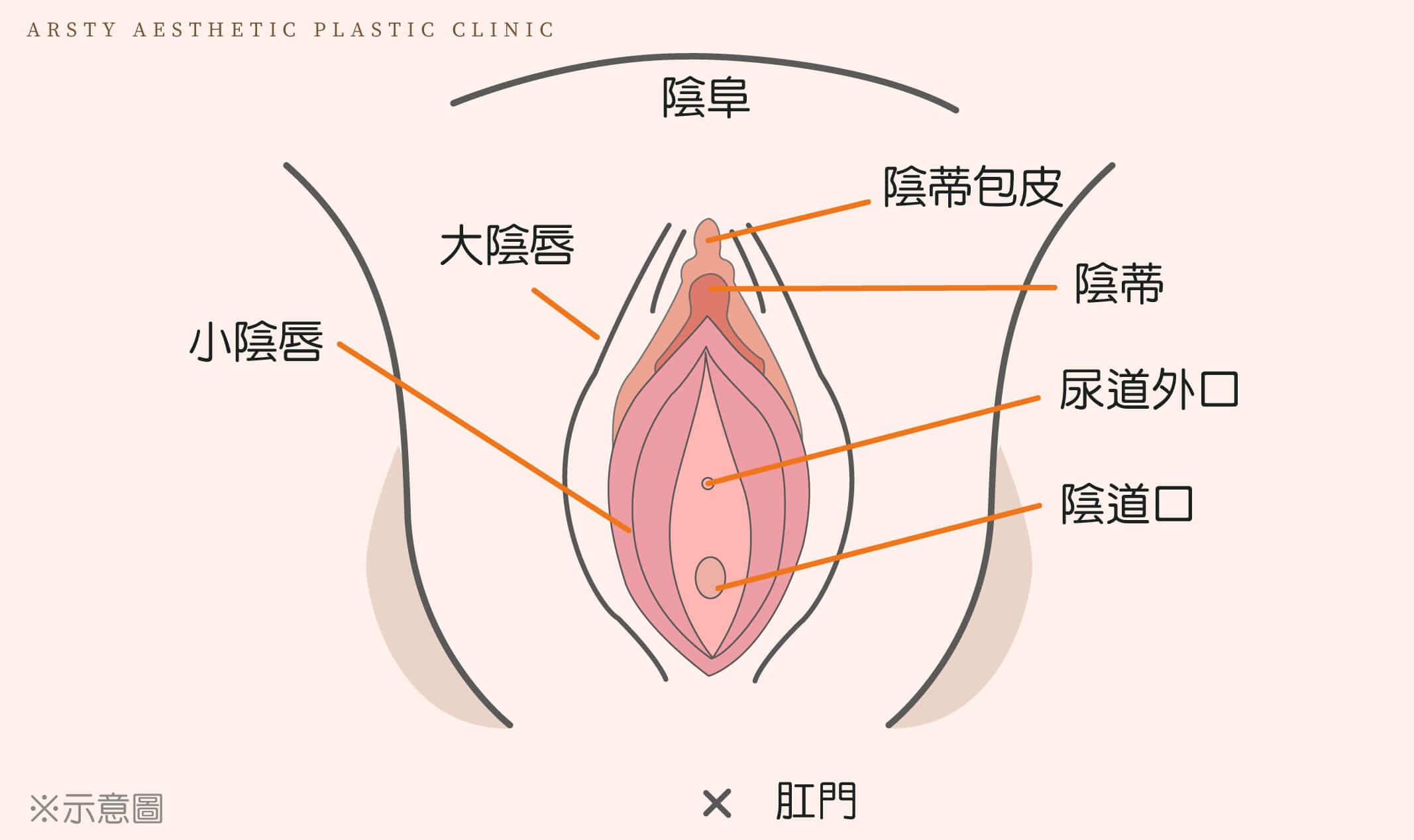
External structure of the private parts
The female external genitalia include:mons pubisIt is the chubby triangular piece of fatty tissue above the pubic symphysis, covered with hair. This fatty tissue is affected by estrogen, so it will bulge slightly during puberty and shrink during menopause.
Go down, and on either side of the vulva are...Labia majoraThe labia majora are two long, raised folds of skin that meet at the perineum. They are rich in subcutaneous fatty connective tissue, appearing fuller and firmer in youth, but becoming more atrophied and looser with age. Generally, the two labia majora close gently, forming the first line of defense for the female genitalia, protecting the labia minora, clitoris, urethral opening, and vaginal opening from harmful substances.
Going inwards, the top one is...clitorisIt is equivalent to the glans penis in men, about the size of a pea, and rich in densely packed sensory nerve endings. It is a very important erogenous zone for women and a major source of sexual pleasure.
The clitoris is covered withClitoral foreskinThe degree of coverage varies from person to person.
Extending downwards are two soft petals.Labia minoraTo protect the cleanliness of the vaginal opening, the color, shape and size of the labia minora vary greatly from person to person, and the two sides are almost always asymmetrical. In fact, as long as it does not affect daily life and good hygiene habits are maintained, the labia minora are normal and healthy, and surgery is not always necessary.
Why undergo cosmetic surgery for the private parts?
Statistics show that from 2014 to 2018, the number of labiaplasty surgeries in the United States increased by 52.9%, indicating a significant increase in demand. So when is labiaplasty necessary? It can be divided into two situations:
I. Functionality:
When the labia minora are too large or protrude beyond the labia majoraWalking or exercising can easily cause repeated friction.Wearing tight pants can cause pain, especially when wearing them, and over time it can lead to pigmentation and rough skin; it may also cause...Inconvenience and pain during sexual intercourseThis significantly reduces the quality of sex. On the other hand, it also increases...Difficulty in cleaningWhen urinating or during menstruation, urine, secretions, and menstrual blood may get into the folds of the labia minora. If not properly cleaned, in a closed and humid environment, it will not only emit an embarrassing odor, but also easily cause infection.
II. Aesthetics:
More and more women are paying attention to the aesthetics of their genitals, hoping for smaller, thinner labia minora that are symmetrical and ideally covered by the labia majora. Asymmetrical labia minora that are too long or too wide can cause discomfort and embarrassment, especially with the current fitness trend, where tight pants or swimsuits can easily reveal their shape. Furthermore, during sexual activity, women may feel pressured and insecure in front of their partners, making it difficult to relax and enjoy sex, thus affecting intimacy. Psychologically, a 2020 systematic review of genital plastic surgery indicates...Women experiencing discomfort in their intimate area do indeed feel more confident and have a greater sense of self-esteem after undergoing intimate area cosmetic surgery.。
Labiaplasty can be broadly divided into two methods:
wedge reduction surgeryA wedge-shaped excision is performed on the excessively large or protruding labia minora, with the scar hidden on the side.
Edge trimmingAlong the edge of the labia minora, remove any excessively long, protruding, or dark-colored portions, and then suture along the edge.

However, aesthetic standards for the intimate area vary considerably depending on cultural and contemporary trends, making them quite subjective. Clinically, a delicate assessment will be conducted based on each individual's labia minora shape and desired outcome, taking a woman's perspective to design a suitable surgical approach. During the procedure, gentle and professional techniques will be employed, utilizing plastic surgery skills to perform multi-layered, meticulous suturing to minimize scarring, restore the labia minora to their delicate size, and create an alluring curve.
Labiaplasty Surgery Q&A:
1. Do I need to remove stitches after labiaplasty? Will there be any scars?
Labiaplasty requires the removal of excess tissue. To aid wound healing and achieve a natural appearance, meticulous suturing is essential. Absorbable sutures are used during the procedure, with layered, aligned sutures. Sutures do not need to be removed post-surgery. Only a small percentage of individuals have slower suture metabolism, and if the suture ends haven't fallen off by three to four weeks, a follow-up appointment for suture removal is necessary. Generally, scarring in the pubic area is very inconspicuous.
II. Will labiaplasty affect sensitivity?
No.This is a very important question because the labia minora is one of the key sources of sexual pleasure! From an empirical perspective, in an American histological study, scientists divided the labia minora into six regions from the outside to the inside and from top to bottom. They found that the nerve density in each region was quite similar. This means that women who undergo labiaplasty will not lose sensation in their labia minora by removing a specific area, because there are still a considerable number of sensory nerves distributed in other areas.
Another study was more direct. Scientists measured the sensitivity of women who underwent labia minora and clitoral foreskin reduction, comparing the sensitivity before and after the surgery. They found that the labia minora only felt dull for a short period after the surgery, but in the long term, after three months, six months, and one year of follow-up, the sensitivity of the labia minora did not decrease compared to before the surgery. The same experiment also indicated that nearly 50% of the participants reported an increase in the frequency of sexual activity after the surgery, and 30% found it easier to reach orgasm, with increased intensity.
3. How long is the recovery period after labiaplasty? When can I resume sexual activity?
This is also a very important question, because there might be a need after the surgery! To sum it up first...Avoid lifting heavy objects and strenuous exercise for two weeks, and avoid sexual activity for four weeks.To prevent the wound from tearing and bleeding, it's important to avoid excessive movement. Post-operative pain is generally low, but it's advisable to avoid rubbing the affected area. If possible, apply ice packs and maintain a pelvic elevation for three days post-surgery to reduce swelling. Post-operative wound care is very simple; just keep the wound clean, shower, and it won't affect most aspects of daily life.
IV. Will labiaplasty affect pregnancy? Will it affect the hymen?
No! Labia minora surgery is performed on the vulva.It will not affect future pregnancy and fertility.There is still some distance between the hymen and the inside of the hymen, so women without sexual experience do not need to worry about damaging their hymen.
5. What should I pay attention to after labiaplasty?
Avoid smoking and secondhand smoke for one month after surgery!Nicotine impairs blood circulation in surrounding tissues, including our most delicate genitals, severely affecting wound healing. In the long run, the chemicals in cigarettes can also affect the overall health of the genitals and even sexual satisfaction.