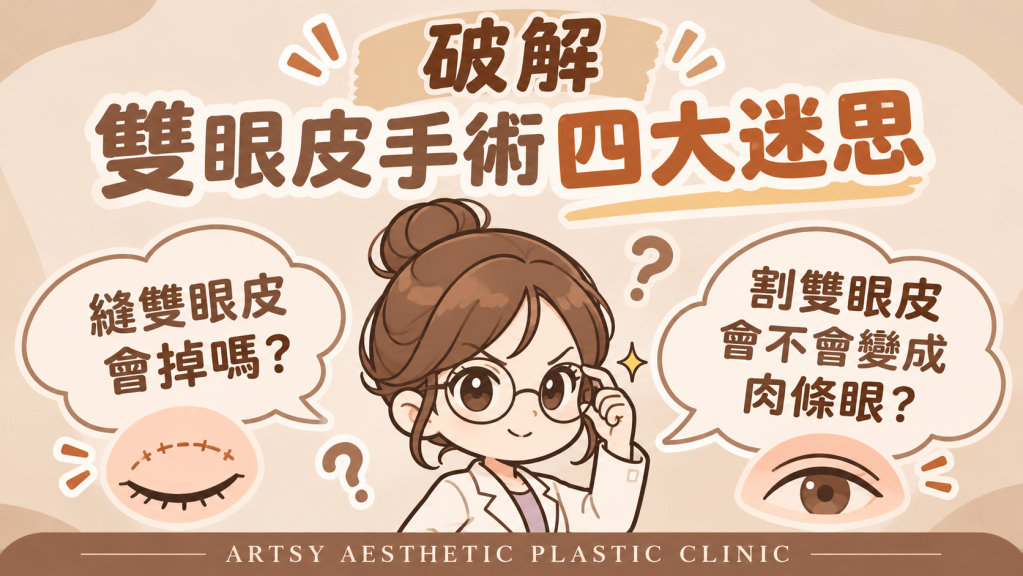
Will my double eyelid sutures fall off? Will I end up with sagging, fleshy eyes after double eyelid surgery? Debunking 4 common myths about double eyelid surgery.
Want to get double eyelid surgery but worried that the crease will disappear shortly after the procedure? Or that after the surgery, your eyelids will become wide and swollen, looking like fleshy strips, and extremely unnatural? These are common questions many people have when considering surgery. Although double eyelid surgery is common, suture-based and incision-based surgeries each have their suitable eyelid conditions, and the postoperative results will be affected by individual eye structure, surgical method, and recovery process.
Are double eyelid creases really prone to falling off? Why might double eyelid surgery result in an overly wide crease or an unnatural-looking appearance? This article addresses four common misconceptions about double eyelid surgery, covering surgical principles, eyelid conditions, and postoperative recovery. It will help you understand common misunderstandings and highlight important pre-operative details.
Myth 1: Double eyelids are easy to fall off and don't last long after surgery?
Whether double eyelid surgery will result in loosening depends not only on the surgical method but also on the condition of the eyelids and the surgical design. Sutured double eyelid surgery primarily uses sutures to fix the internal eyelid tissues, forming a double eyelid crease. If the method of fixing the tissues or the surgical design is inappropriate, the crease may become less noticeable over time.
In addition, everyone's eyelid thickness, fat distribution, and the condition of each eye are different. For example, if one eyelid is thinner and the other has obvious puffy eyes, the surgery needs to be evaluated separately, and the same design cannot be applied to both eyes.
Therefore, double eyelid sutures are not necessarily prone to falling off, but there is no guarantee that they will never loosen after the surgery. If you are worried that the crease will not last long, it is recommended that you have your eyelids assessed by a doctor to understand whether the suture method is suitable for you, and then discuss the surgical design and possible postoperative changes.

Further Reading:[Dr. Wei-Cheng Ching's Viewpoint] Is suture method double eyelid prone to loosening?
Myth 2: Getting double eyelid surgery easily results in fleshy, slender eyes, with the crease being wider and more noticeable?
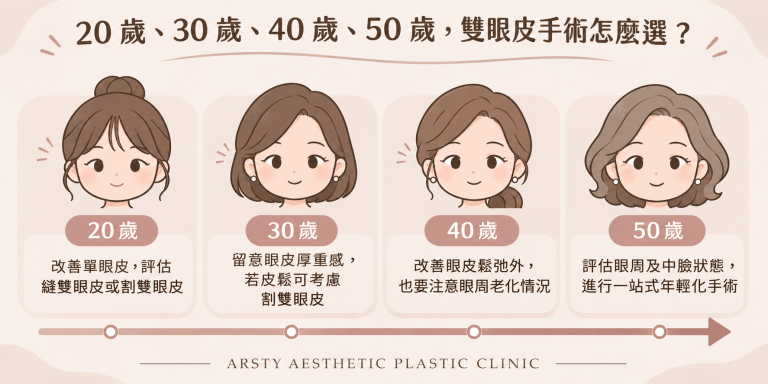
The term "striped eyes" generally refers to double eyelids with an overly wide crease, making the upper eyelids appear thick and swollen. While double eyelid surgery doesn't necessarily result in striped eyes, if the original eyelid thickness and eyebrow-to-eye distance weren't considered beforehand, the resulting double eyelids might appear too wide and lack a natural look.
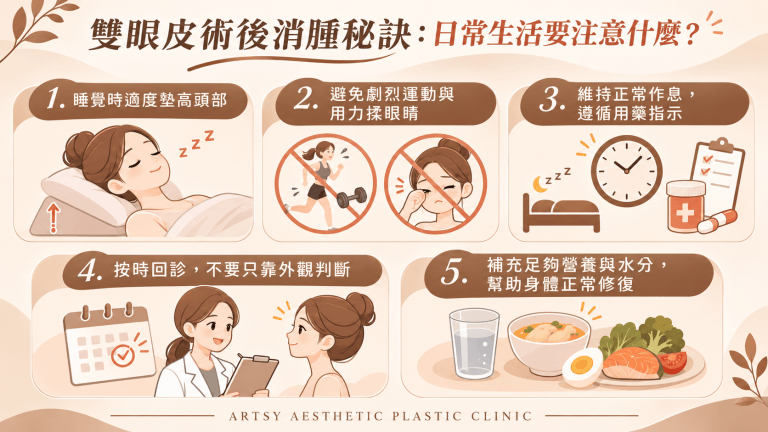
Additionally, it's normal for the eyelids to appear wider immediately after surgery due to swelling. Typically, noticeable swelling will gradually subside after about two weeks, but it may take one to three months for the crease to look more natural. The actual recovery time will vary depending on the surgical method, eyelid condition, and individual constitution.
Double eyelid surgery isn't about making the crease as wide as possible, nor should you simply copy the eye shapes of celebrities or online influencers. Everyone's eyelid structure and eyebrow-eye ratio are different, so the suitable width will naturally vary. It's recommended to bring a photo of your preferred eye shape to discuss with your doctor before surgery, so the doctor can assess the most suitable surgical method and crease design for you.

Myth 3: If you have a lot of fat in your eyelids, you must get double eyelid surgery?
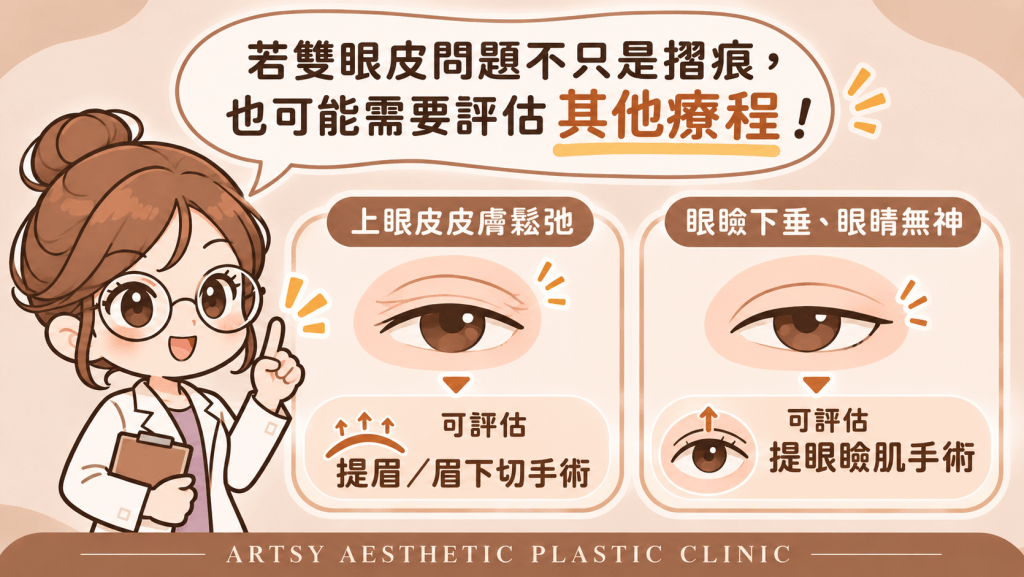
If you notice your eyelids are thick and swollen, many people might immediately think of getting double eyelid surgery to make them thinner. However, puffy eyelids aren't always just caused by excess fat; they can also be related to skin laxity, thickness of the orbicularis oculi muscle, or other eye structures. Without first identifying the underlying cause, even double eyelid surgery may not necessarily improve the problem you were concerned about.
If, after evaluation by a doctor, it is found that the heavy eyelids are mainly related to excess skin or fat, further discussion can be held regarding whether related tissue adjustments are necessary. If the primary issue is loose upper eyelid skin, further evaluation may also be required.Brow lift surgery或Eyebrow trimmingSurgical options are available. As for the eyes appearing tired and listless, this could be related to ptosis (drooping eyelids), in which case further evaluation is needed.Levator palpebrae superioris muscle surgery。
Therefore, having thick eyelids doesn't necessarily mean you need double eyelid surgery, nor is removing more fat always better. The key is to first identify the cause of the problem, and then have a doctor assess the appropriate surgical method. This will prevent you from having surgery that doesn't address the area you're truly bothered by.
Myth 4: Double eyelid surgery has a quick recovery, and you can see the final result after the swelling goes down?
After double eyelid surgery, swelling, bruising, tightness, or uneven swelling reduction between the two eyes may occur. These changes usually take time to gradually improve. Even if you choose a suture-based surgery, it doesn't mean there won't be any swelling; an incision-based surgery may require a longer recovery time due to the incision and tissue adjustments.
In the initial postoperative period, the double eyelid crease may appear wider, and the left and right eyes may temporarily be asymmetrical. As the swelling gradually subsides, the appearance of the crease will continue to change, so it is not advisable to judge the surgical outcome too early.
During the recovery period, follow your doctor's instructions for wound cleaning and postoperative repair, and refrain from strenuous exercise, swimming, and other activities that may increase the burden on the wound or raise intraocular pressure. As for when you can apply makeup, wear contact lenses, or resume daily activities, it depends on the condition of the wound and your doctor's advice.
If postoperative symptoms such as persistent and worsening pain, significant unilateral swelling, abnormal bleeding, or changes in vision occur, contact the medical institution as soon as possible so that the doctor can identify the cause and provide timely treatment.
Conclusion: How to choose a double eyelid surgery? First, understand your own eyelid condition.
Having double eyelids done by suturing doesn't mean they will fall off, and getting double eyelid surgery doesn't mean you'll end up with fleshy, droopy eyes. The choice of surgical method, the width of the crease, and postoperative recovery all need to take into account the individual's eyelid thickness, skin laxity, eye structure, and overall eye shape.
If you are considering double eyelid surgery, you can first have a doctor assess your eyelid condition, understand the differences between different surgical methods, and then discuss the appropriate surgical plan.
Pumei Plastic Surgery Clinic offers one-on-one evaluations by a professional eye plastic surgery team, helping you find the right surgical direction based on your individual eye condition and needs.
Frequently Asked Questions about Double Eyelid Surgery (FAQ)
Q1: My double eyelid suture fell off. Can I have it stitched up again?
You can consult a doctor for an evaluation first, but not everyone is suitable for re-suturing. The doctor will determine whether re-suturing is appropriate, or whether other surgical methods need to be considered, based on the original condition of the eyelid and the state of the crease.
Q2: How long after double eyelid surgery can I wear makeup?
It depends on how well the wound is healing. Generally, it is recommended to apply makeup 3 days after the stitches are removed, especially since eye makeup can easily come into contact with the eyelid wound. It is advisable to follow the doctor's instructions and wait until the wound has healed and stabilized before applying makeup to avoid increasing the risk of irritation or infection.
Q3: Is it normal for the two sides to be different after double eyelid surgery?
After surgery, the swelling and rate of reduction in the left and right eyes may differ, so they may appear asymmetrical immediately after the procedure. This does not necessarily indicate a problem with the surgical outcome. You can follow your doctor's instructions for follow-up appointments. If the asymmetry becomes more pronounced, or if you experience increased pain or changes in vision, you should seek medical attention as soon as possible.