Where is Yiliansi suitable for injection? Learn about nasolabial folds, chin, and other areas all at once.
Many people are concerned about facial hollowing not only because it makes them look tired, but also because of beliefs in face reading and fortune telling. Areas like the marital palace (the area between the eyebrows) and the chin are often the focus of attention, with hollowing or a lack of fullness in the contours being a common concern. Using injectable fillers to adjust facial lines is a popular option, and Ellansé is one such material frequently mentioned.
So, where is Yiliansi (a type of facial filler) suitable for injection? Can you simply fill in any depression you see? Actually, it depends on each person's facial structure. The tissue, degree of depression, and treatment method vary depending on the area. This article will start with common areas such as nasolabial folds, the chin, and jawline to help you understand where Yiliansi is suitable for injection, and what precautions to take before the procedure!
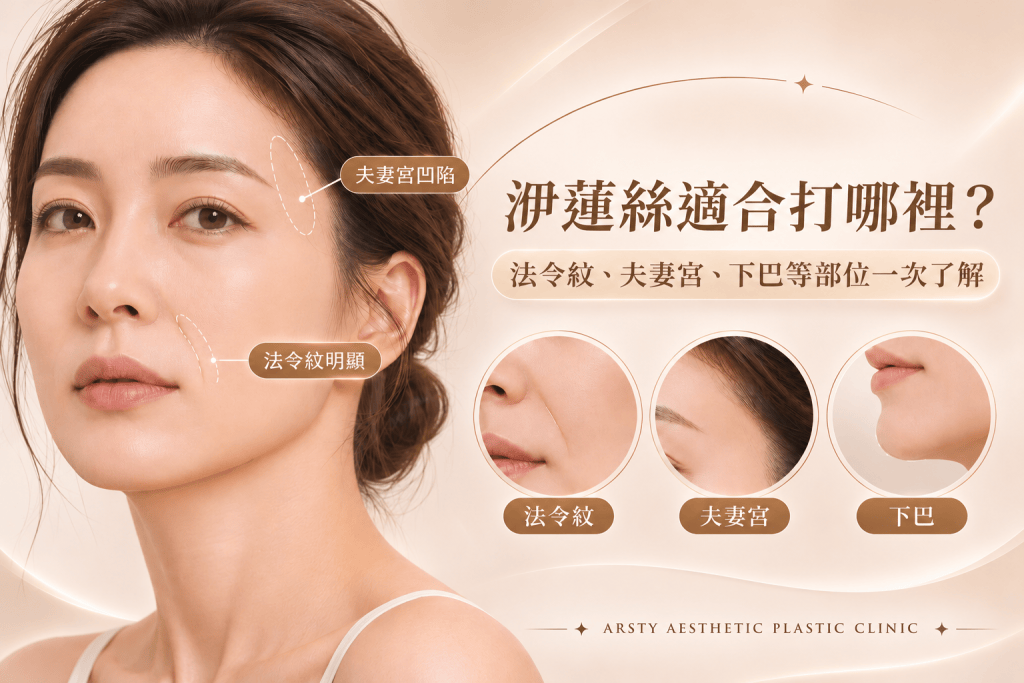
Why do nasolabial folds, the area around the marital palace (on the forehead), and the chin appear sunken
There are many reasons for facial hollowing. Some are due to differences in bone and fat distribution from birth, while others are caused by changes in age, weight, or soft tissue, making previously inconspicuous hollows gradually noticeable. The nasolabial folds, the area between the eyebrows, and the chin are often discussed mainly because these areas frequently affect the overall contour and proportion of the face.
What are nasolabial folds? Why do they become more noticeable?
Nasolabial folds are lines that extend from the sides of the nose towards the corners of the mouth. When young, they may only be more noticeable when making facial expressions, but as we age, changes in the skin, fat, and other soft tissues can cause these lines to gradually deepen.
In addition, everyone's face shape and bone structure are different. Some people are naturally more prone to having obvious nasolabial folds. Therefore, whether nasolabial folds are suitable for adjustment with Yiliansi should not only be judged by the depth of the lines, but also by assessing the nasal base, facial fat distribution and overall contour.
In some cases, it may be assessed to improve the visual appearance of nasolabial folds by filling in the surrounding sunken or undersupported areas.
Why does the area between the eyebrows (the area between the eyebrows and the marital palace) appear sunken? Common causes of depressions can be identified through facial structure analysis.
The "marriage palace" commonly referred to usually refers to the area near the temples, on the outer side of the eyebrow tail. The hollowness of this area is related to each person's bone structure, fat distribution, and soft tissue condition. Some people are born with a more hollow area, which is part of their facial contour; others find that their originally smooth lines gradually become hollow as they age, experience weight changes, or their facial soft tissue changes.
From the front, a concave area in the marital palace (the area between the eyebrows) may make the contours of the sides of the face more pronounced. However, a concave shape does not necessarily indicate a health problem, nor does it always require adjustment.
If you feel that the sunken temples are a cosmetic issue that you wish to improve, you still need to have a doctor assess the bones, soft tissues, and overall facial proportions of the temporal region. It is not simply a matter of filling the sunken area as full as possible.
If my chin isn't full enough, is it necessary to get it adjusted?
The appearance of the chin is related to bone structure, soft tissue, and overall facial proportions. Some people are born with a shorter or receding chin, while others have a localized depression in the center of their chin, which makes their features appear less defined when viewed from the front or side.
However, an insufficiently full chin does not necessarily mean that volume needs to be increased. If you want to improve the appearance of your chin, you should first identify whether the main problem is its length, front-to-back position, or local depressions. Then, a doctor will assess whether it is suitable to adjust it through injectable fillers based on the proportions of your face from the front and side.
What is Yiliansi? Why can it improve facial hollowing?
Ellansé is an injectable implant product that is mainly composed of CMC gel carrier and PCL (polycaprolactone) microspheres.
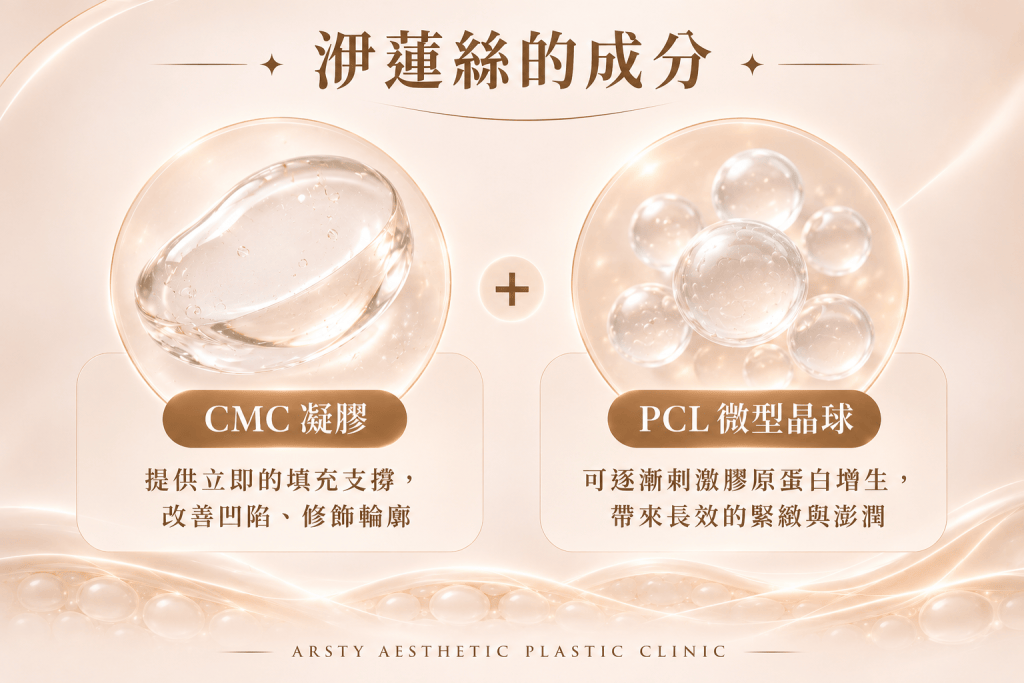
CMC Gel: Provides immediate volume filling
The CMC (carboxymethyl cellulose) in Yilian Silk is a gel carrier that can provide a certain volume after injection, so changes in local appearance can be seen immediately after treatment.
PCL microspheres: undergoing structural changes over time
In addition to the gel carrier, Yilian Silk also contains PCL microspheres. The PCL microspheres can induce subsequent tissue reactions; as the gel carrier is gradually absorbed, subsequent tissue changes may also affect the final appearance.
In other words, the effect of PCL is not only to fill the volume after injection, but the subsequent appearance may also be affected by the tissue reaction caused by PCL.
However, everyone's reaction is different, and the actual effects and duration of the results cannot be generalized. It's also not advisable to interpret the product's function as a guarantee of lifting, firming, or rejuvenation.
What precautions should be taken before applying Yiliansi? Four key points to understand at a glance.
Before undergoing an injection treatment, many people's first thought is often, "How many cc do I need?" But actually, rather than worrying about the dosage, it's more important to first clarify the problem you want to improve. In particular, the causes of nasolabial folds, sagging chin, and chin hollows are different, and the appropriate treatment may not be the same.

1. First, determine whether you want to improve facial contours or facial proportions.
For example, if you see deep nasolabial folds, it doesn't necessarily mean you have to fill them in; if you see a concave area in the marital palace, it doesn't necessarily mean you have to fill in the depression.
In some cases, the proportions of surrounding tissues matter, and treating only one area may not yield the desired visual effect. Therefore, during the consultation, you can directly tell the doctor the area you are most concerned about, and the doctor will then assess it based on the overall facial shape and tissue condition.
2. Different parts have different anatomical structures.
The fat, muscles, blood vessels, and other tissues beneath different areas of the face vary. Areas near the eyes, nose, and temples, in particular, involve more complex anatomical structures, requiring injection depth and placement to be determined by a trained physician. Therefore, injection techniques used in one area cannot be directly applied to another.
3. Confirm whether the product is a legal medical device.
Before undergoing treatment, it's advisable to verify the source of the products from the medical institution, understand which product you are using, and under what conditions it is approved for use. You can also review the product instructions to understand the indications and precautions, gaining a basic understanding of the treatment course before making a decision.
4. If you have previously undergone filler treatments, please inform your doctor beforehand.
If you have previously received hyaluronic acid, hyaluronic acid fillers, or other fillers, remember to inform your doctor during your consultation. This includes the injection sites, the time of injection, and whether you experienced any lumps, redness, swelling, or other adverse reactions. This information will help your doctor assess your current facial condition.
What are some common complications after hysterosalpingography (Hydrocotyling)?
It is not uncommon for some local reactions to occur after injection. The following are some possible situations:
Redness, swelling and bruising
Injections can cause local irritation, so if redness or bruising occurs immediately after the injection, you can observe the recovery process. If the symptoms do not gradually improve or even worsen, you should return to the doctor for confirmation.
There are hard lumps or changes in texture in some areas.
After the injection, you may experience a temporary feeling of a foreign body, swelling, or changes in touch at the injection site. If the lump persists, becomes more noticeable, or is accompanied by pain, redness, or swelling, it is not recommended to massage or treat it yourself. Instead, return to your original medical facility as soon as possible for a doctor's assessment.
Pay special attention to any unusual pain or changes in skin color.
While injectable fillers are common, rare but serious vascular-related complications still exist. If the filler accidentally enters a blood vessel, it can cause serious problems such as skin necrosis, visual abnormalities, and even cerebral ischemia.
If you experience unusually severe pain, sudden whitening or discoloration of the skin, changes in vision, or other neurological abnormalities during or shortly after the procedure, do not assume it is a normal post-operative reaction. You should immediately notify your doctor and seek medical treatment.
Don't rush to judge the final result after surgery.
The effects of erythromycin are not limited to the immediate volume change after injection; it is also affected by the tissue response generated by PCL. Therefore, the appearance immediately after injection may not represent the final stable state.
If you have any concerns about the appearance after the procedure, it is recommended to follow your doctor's instructions for a follow-up appointment, rather than undergoing additional injections or excessive massage on your own.
Where is Yiliansi suitable for injection? A look at common questions.
Q1: Where is Yiliansi suitable for injection?
The application sites for dermal fillers need to be assessed based on an individual's facial structure, the location of the depressions, and overall proportions. Commonly discussed areas include nasolabial folds, the jawline, and the chin. However, the tissue structure and treatment considerations differ for different areas, and not all depressions are suitable for direct filling. A doctor should still assess the appropriate treatment method.
Q2: How long does Yiliansi last?
PCL implants are non-permanent. The gel carrier in the product will be gradually absorbed by the body, and the PCL microparticles will also gradually degrade over time. The actual duration depends on the injection site, the product model used, and individual circumstances.
Q3: What is the difference between hyaluronic acid and hyaluronic acid?
Both hyaluronic acid and polysaccharide can be used as facial fillers, but their materials are different. Hyaluronic acid is a polysaccharide of the hyaluronic acid family and is often used as a soft tissue filler; hyaluronic acid, on the other hand, is composed of PCL microparticles combined with a CMC gel carrier.
The two differ in materials, methods of action, and suitable treatment situations, and cannot be simply compared as "which one is better." The actual choice depends on the area to be improved and the condition of the face.
Q4: Is Yiliansi suitable for everyone?
Not necessarily. Whether or not Yiliansi is suitable for use depends not only on the area to be improved, but also on facial structure, the degree of depression, past injection records, and overall treatment needs. In addition, if you are pregnant, planning to become pregnant, or breastfeeding, you should inform your doctor before receiving treatment.
Where is Yiliansi suitable for injection? It depends on the individual's facial structure and the specific issues they want to address; it's not simply a matter of filling in depressions. If you're considering Yiliansi treatment, it's recommended to first understand the product information and indications, and then have a doctor assess the most suitable treatment method.
Want to learn more about Yiliansi? Feel free to consult with Pumei Plastic Surgery Clinic for a one-on-one consultation with a doctor to assess the most suitable treatment based on your individual facial features and needs.