What is Phoenix Radio Wave? Its functions, effects, and suitable target groups explained at a glance.
What is Phoenix Radiofrequency? If you've recently noticed that your facial contours aren't as firm as they used to be, your jowls are becoming more prominent, or fine lines are appearing around your eyes and mouth, it may mean your skin is gradually losing its original support. Faced with aging issues, many people want to improve sagging skin but worry about the long recovery period after surgery. Therefore, they start looking for Phoenix Radiofrequency treatments, hoping to find a suitable firming and lifting treatment without surgery.
This article will explain the working principle, actual effects, and suitable groups of Phoenix Radiofrequency, guiding you to understand how Phoenix Radiofrequency improves sagging and fine lines. Whether you are a beginner to cosmetic procedures or a consumer who has already started Phoenix Radiofrequency treatments, you can learn about the principles of Phoenix Radiofrequency, common treatment areas, changes in effects, and precautions in this article.

What is Phoenix Radio Wave? Why can it improve skin laxity?
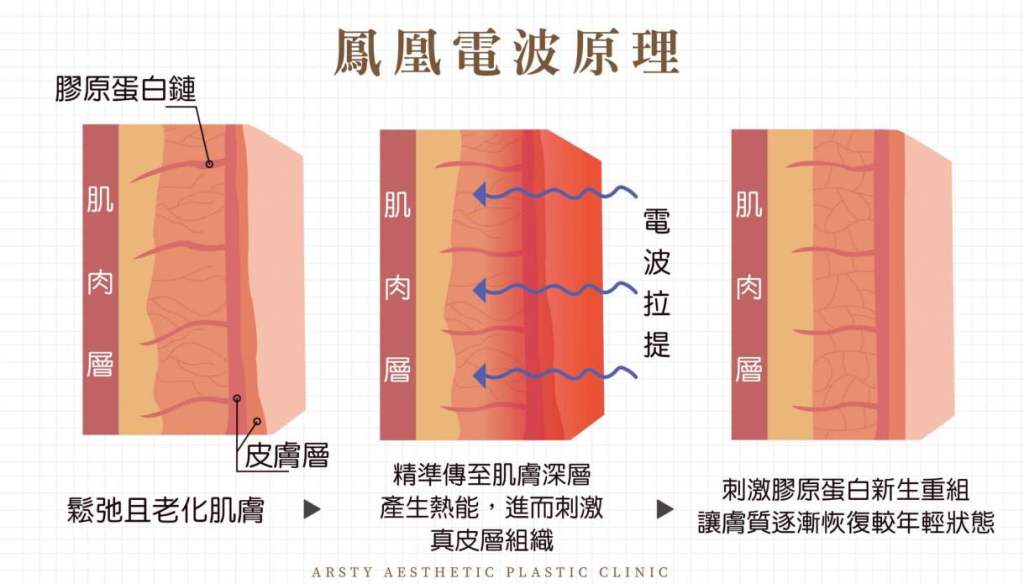
When it comes to anti-aging cosmetic procedures, many people immediately think of "lifting," but they don't want to undergo surgery to look younger. Phoenix Radiofrequency is a non-invasive radiofrequency skin tightening treatment that uses patented radiofrequency technology to stimulate deep layers of the skin in a non-invasive way, promoting collagen regeneration and rejuvenating the skin. Because it involves almost no wounds, zero recovery time, and noticeable results, leaving skin looking naturally younger, it has become increasingly popular in recent years. It's not only recommended by many beauticians but has also become a regular treatment for celebrities. Phoenix Radiofrequency is the fourth generation of radiofrequency lifting, certified by both the US FDA and Taiwan's Ministry of Health and Welfare. Compared to the third-generation Thermage CPT, it reaches deeper into the skin and is more effective.
Why do facial contours change as we age? The gradual sagging of skin, the appearance of fine lines and blurred contours are related to collagen loss and decreased skin support. With age, coupled with factors such as UV exposure, lifestyle habits, and individual constitution, the skin may gradually lose elasticity, causing the once-defined jawline to become blurred, and signs of aging may appear around the eyes, corners of the mouth, and nasolabial folds.
One of the biggest features of Phoenix radiofrequency treatment is that it requires no surgical incisions. For busy individuals who don't have time for a long recovery period or who don't want to undergo a facelift, a doctor can assess whether a non-invasive treatment is suitable for improving skin firmness. The treatment uses monopolar radiofrequency for volumetric heating, delivering energy to collagen-rich deep tissues while protecting the skin's surface, initiating the subsequent collagen rebuilding process.
What are the effects of Phoenix radio waves? What aging problems can it improve?
Is your face becoming saggy, your facial contours disappearing, or are you experiencing increasingly noticeable fat around your mouth even though you haven't gained weight? These are common concerns many people considering Phoenix Radiofrequency treatment hope to address. Phoenix Radiofrequency utilizes monopolar radiofrequency technology to deliver heat energy to the dermis and subcutaneous tissue, promoting collagen regeneration, restarting the skin's repair mechanisms, and temporarily slowing down the aging process. However, due to differences in individual aging processes, facial structure, and treatment areas, the actual results will vary from person to person.
For those whose facial skin is beginning to sag, as the skin's support weakens, issues such as chubby cheeks and a blurred jawline may gradually appear. Appropriate radiofrequency energy stimulation can help improve skin firmness, making previously blurred facial contours appear more defined. Besides the facial contours, areas prone to fine lines, such as the eye area, forehead, and corners of the mouth, are also areas of concern for many. Because the skin thickness and treatment needs vary in different areas, doctors will choose the appropriate probe and treatment method based on the individual's skin condition.
In addition to facial treatments, Phoenix radiofrequency therapy can also be applied to other parts of the body as needed; however, the probe, number of pulses, and energy planning required will vary depending on the treatment area. Therefore, rather than blindly pursuing "the more pulses, the better the effect," it is more important to first let the doctor understand your aging condition and expectations, and then arrange a suitable energy configuration and treatment plan based on your individual conditions.
How long does it take for Phoenix radio waves to be effective? How long do the effects last?
"How long will it take to see results after Phoenix Radiofrequency treatment?" is one of the most frequently asked questions before the treatment. Generally speaking, the weeks to months following the treatment are a crucial stage for continuous collagen remodeling. With the fourth-generation Phoenix Radiofrequency treatment, a lifting effect can be felt after the first procedure. As the skin naturally repairs itself, firmness, facial contours, and fine lines will gradually improve, with the best results appearing in approximately 1.5-6 months.
The effectiveness of Phoenix radiofrequency treatments is influenced by factors such as age, skin aging rate, lifestyle habits, UV exposure, and individual constitution. Therefore, it is still necessary to maintain daily sun protection, a regular sleep schedule, and proper skincare. To maintain a more stable skin condition, a doctor can assess the frequency of subsequent treatments based on individual aging rates and treatment response. More frequent treatments are not necessarily better; the treatment schedule should be based on individual needs and the professional judgment of the doctor.
As for how long the effects of Phoenix radiofrequency last, it is affected by factors such as age, the degree of skin aging, lifestyle habits, UV exposure, and individual constitution. Even after completing the treatment, the skin will still age naturally over time, so daily sun protection, regular sleep patterns, and proper skincare remain essential for maintaining healthy skin.
If you wish to maintain a more stable skin condition, your doctor can assess the frequency of subsequent treatments based on your individual aging rate and response to the treatment. More frequent cosmetic procedures are not necessarily better; finding a treatment rhythm that suits your needs is more important.
Who are suitable candidates for Phoenix radiofrequency ablation? What precautions should be taken before the treatment?
Who is a suitable candidate for Phoenix radiofrequency treatment? If you notice your cheeks are losing firmness, your jowls are becoming more prominent, your jawline is blurring, or fine lines are appearing around your eyes and mouth, you should first consult a professional to understand your aging process and then assess whether Phoenix radiofrequency treatment is right for you. Areas that can be assessed include gradually sagging cheek skin, more prominent jowls, an increasingly blurred jawline, and fine lines appearing around the eyes or mouth. Even if you don't yet show obvious signs of aging, but wish to maintain firm skin, you can also discuss your treatment needs with a doctor.
Before undergoing Phoenix Radiofrequency treatment, if you have recently received hyaluronic acid, botulinum toxin, or other cosmetic procedures, you should proactively inform your doctor for a treatment evaluation. Furthermore, the effectiveness and safety of Phoenix Radiofrequency treatment are also related to the equipment, the source of the probe, and the professionalism of the operator. The Pumei medical team consists of professional plastic surgeons with certified expertise and extensive surgical experience. They are familiar with various minimally invasive cosmetic procedures and possess a timeless aesthetic sense, tailoring natural, flawless, and customized treatments that align with Eastern aesthetic preferences.
Is Phoenix radiofrequency treatment worthwhile? Clarify your needs before starting the treatment.
If the main problem is that the skin is gradually losing elasticity, the contours are becoming blurred, or you want to improve fine lines and firmness through non-invasive methods, Phoenix radiofrequency is a good treatment option; however, if you expect to significantly change your face shape, improve severe sagging, or deal with obvious depressions, you may need to be evaluated from other treatment directions, such as undergoing cosmetic minimally invasive surgery.
In summary, Phoenix Radiofrequency is a non-invasive treatment that uses monopolar radiofrequency energy to improve skin firmness, fine lines, and blurred facial contours. Want to know if Phoenix Radiofrequency is right for your skin? Schedule a consultation with a doctor now for a comprehensive skin and facial contour assessment to find the right treatment plan for you. You can also view more information about Phoenix Radiofrequency treatments, frequently asked questions, and pre- and post-treatment precautions to fully prepare for your treatment choice!