Why is a second facelift surgery necessary? Analysis of the reasons for facelift failure and key points of facelift revision surgery.
The essence of a Face Lift lies in reconstructing the sagging facial structure caused by aging through accurate anatomical assessment and a safe lifting direction design. However, in clinical practice, some patients still fail to achieve the desired results after their first Face Lift, and may even experience unnatural lines, unevenness, or stiff expressions. These problems are often not simply caused by aging, but are closely related to the choice of surgical technique, the level of manipulation, or discrepancies in preoperative assessment.
When the initial facelift fails to address deep structural issues, a revision facelift is necessary for improvement. Unlike the initial facelift, revision facelifts must be performed on altered tissue, making them technically more challenging and demanding a greater understanding of facial structure and clinical experience from the surgeon. Why do initial facelifts fail? And how can a revision facelift be performed to restore a natural and balanced appearance? The following will explain these questions in detail.
▍Common Reasons for a Failed First Facelift
Unsatisfactory results from facelift surgery are not simply due to rapid aging; more often, they are closely related to the details of the surgical technique. The common reasons for failed facelifts in clinical practice can be summarized into the following key factors:

■ The facelift layer is too shallow
If the surgery only addresses superficial skin laxity without simultaneously lifting the deeper SMAS fascia layer of the face, the results are often limited. Procedures such as thread lifting or some traditional facelifts primarily focus on superficial improvements, which can easily lead to a situation where "the epidermis is tight, but the deeper layers are loose," resulting in short-lived effects and even problems such as uneven facial contours and stiff facial expressions.
■ Incorrect lifting direction
Under the influence of gravity, facial aging mostly manifests as sagging. However, the aging pattern varies from person to person. Some people experience more severe sagging in the mid-face, while others experience sagging fat and prominent jowls. Some even have deformed facial contours. Therefore, doctors must design a customized lifting treatment based on each individual's facial structure and degree of aging to improve the problem while maintaining a natural and aesthetically pleasing appearance.
This is why the Arsty Clinic facelift team advocates customized high-end facelifts. If the doctor lacks clinical experience and does not plan the lifting direction and force according to each person's symptoms and anatomical lines, it may lead to crooked cheeks, unnatural upturned corners of the mouth, and deformed jawline, causing the face shape to lose its original harmonious proportions.
■ Excessive tension or uneven stretching
If a facelift is performed too tightly or the tension is unevenly distributed, it can easily cause facial stiffness, outward-pointing eyes, deepened nasolabial folds, and even an uneven jawline. These problems usually require a second facelift surgery to readjust the fascia tension in order to achieve improvement.
■ Residual filler material causes tissue adhesion
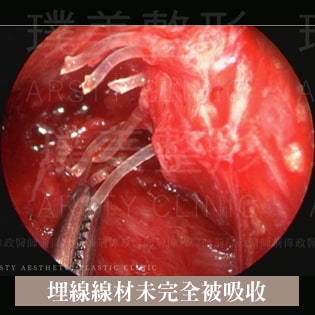
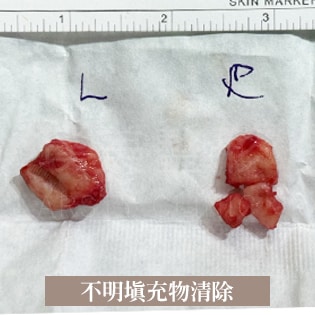
If a patient has previously undergone electroacupuncture, thread lifting, or filler treatments, multiple overlapping procedures can easily lead to tissue fibrosis, resulting in a pulling sensation, sunken lumps (commonly known as "steaming"), or collagen-boosting nodules. Excessive injections of dermal fillers or dermal fillers can cause collagen-boosting nodules, resulting in uneven facial contours and a stiff, unnatural expression. If residual fillers were not properly removed during the first facelift surgery, it is necessary to "clean up the battlefield" before a second facelift revision to lay a good foundation for subsequent lifting and reconstruction.
Arsty Clinic's unique feature: Before planning the treatment, the doctor will...High-resolution ultrasonic detectorIt helps to understand the subcutaneous tissue structure of the face, improves the assessment of customized treatment direction, and makes the postoperative results closer to your desired youthful state.

■Significant postoperative scarring or hypertrophic scarring
The incisions for Face Lift are usually designed in relatively inconspicuous locations such as the hairline, in front of or behind the ears. If the surgery and suturing are done properly, the scars will usually fade gradually after the recovery period, becoming barely noticeable.
However, in the early stages of recovery, the incision is still in the repair phase, and it is normal for it to be more noticeable, which does not indicate surgical failure. If the scar remains noticeable after the reasonable recovery period and the incision line does not improve over time, it is necessary to consider whether it is related to the surgical technique. This situation is mostly related to poor incision design, improper tension distribution, or insufficient suturing, which may lead to noticeable scars, affecting appearance and the overall facelift effect.
Therefore, a facelift not only tests the lifting technique but also heavily relies on the doctor's professional judgment regarding incision location, suturing method, and postoperative scar management. Choosing a doctor and medical institution with extensive experience in facelifts and familiarity with facial anatomy and scar control is crucial to reducing the risk of a failed facelift!
See more: Side effects of a failed facelift surgery; how high are the risks? >>>

Why is a second facelift necessary?
The core of a revision facelift is never just "lifting again," but rather a comprehensive adjustment and reconstruction addressing the problems left over from the first surgery. This type of revision surgery is a highly delicate and layered procedure that must simultaneously address the skin, subcutaneous fat, fascia, and even deep muscle structures to truly restore facial support and stability. During the procedure, the surgeon must release tissue adhesions, remove improper or residual fillers, reassess and reconstruct the tension and fixation of the deep fascia (SMAS), and correct any inappropriate lifting direction to improve an unnatural appearance.
Compared to the initial facelift, the tissue condition faced by a second facelift is more complex. After the first facelift surgery, the facial structure often has blurred layer boundaries and increased tissue adhesion, which greatly increases the safety and difficulty of the facelift revision surgery. It also requires the surgeon to have solid anatomical knowledge and rich clinical experience in order to accurately find the correct anatomical layers and carry out effective reconstruction while minimizing risks.
Furthermore, most patients who choose to undergo a second facelift revision do not actually desire a face that is "tighter the better," but rather hope to restore a natural and harmonious appearance, including smooth lines, natural expressions, and balanced facial proportions, free from the unnatural marks left by the lift. Therefore, the ultimate goal of a second facelift revision is to return to a natural balance of facial structure and aesthetics, rather than simply pursuing an overly youthful visual effect.
See more: What to do if facial contouring surgery fails? Arsty Clinic Professional Facelift Repair Surgery >>>
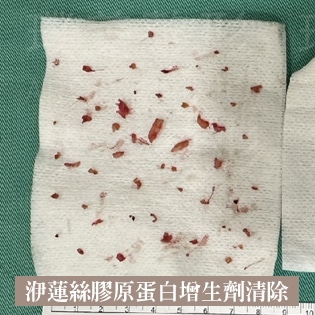
▍Can a failed facelift be corrected with minimally invasive procedures?
Many patients who are dissatisfied with the results of their first facelift often ask if they can "remedy" the problem through minimally invasive procedures such as hyaluronic acid injections, thread lifts, or electroacupuncture. However, from a clinical perspective, when a failed facelift involves deep structural misalignment, fascial tension imbalance, or tissue adhesions, minimally invasive procedures may actually complicate the situation further.
This is because minimally invasive cosmetic procedures are primarily limited to the surface, such as temporarily filling depressions, improving local contours, or enhancing skin firmness. However, they cannot reposition the deep fascia (SMAS) that has been incorrectly lifted, nor can they remove the bulging caused by surgery or multiple treatments, which is tissue adhesion and fibrosis. Repeatedly performing fillers or lifts before the structure has been properly reconstructed may lead to a more unbalanced facial proportion, or even problems such as "bulging," nodules, or facial stiffness.
(See more: What is "smooth-faced skin"? Learn about the causes, common areas, and repair methods for smooth-faced skin >>>)
In contrast, surgical revision can penetrate deep into the tissue, treating the skin, subcutaneous fat, fascia, and muscle layers in a layered manner to remove residues and adhesions, and then re-establish a stable support structure that conforms to the direction of facial aging. Only through surgery can the structural problems left by the first facelift be truly corrected, allowing the face to return to a natural and harmonious state, rather than merely masking the symptoms on the surface. In other words, surgical revision is not a radical option, but rather the safest and most effective way to improve long-term results currently available in clinical practice.
How to choose a doctor for a facelift repair?
Revision facelifts are highly complex facial reconstruction surgeries, far more so than primary facelifts. Surgeons must possess a solid foundation in facial anatomy and extensive clinical experience with SMAS and Deep Plane Facelifts to safely manage postoperative issues such as tissue adhesions, fibrosis, and structural misalignments. Furthermore, a keen assessment of facial proportions and the overall aesthetic progression of aging is crucial for a natural and harmonious result after revision surgery.
When choosing a facelift revision physician, in addition to experience and skills, the physician's international recognition and clinical cases can also be used as a reference.Dr. Wei-Cheng ChingSpecializing in Face Lifts, facial rejuvenation surgeries, and bone reduction surgeries, his techniques have earned him a strong reputation among patients both domestically and internationally, and are widely recognized by plastic surgeons worldwide. He has had patients from Japan,Physicians in Australia and MalaysiaThey came to Taiwan specifically to observe his surgical techniques. In the past two years, Dr. Jing has also been invited to share his clinical experience in Face Lift at professional medical conferences in Japan, which shows that his skills have reached international professional standards.
Therefore, when faced with unsatisfactory results from the first facelift or a need for repair due to complex structures, it is recommended to choose a physician with in-depth anatomical knowledge, extensive experience in revision surgery, and comprehensive medical equipment support to ensure surgical safety and natural postoperative results.
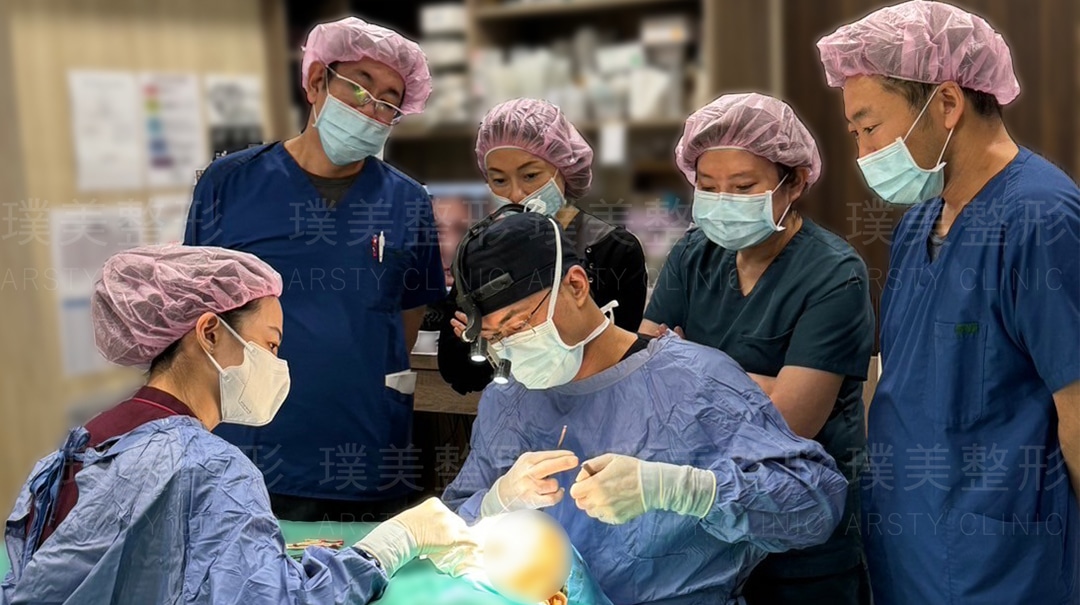
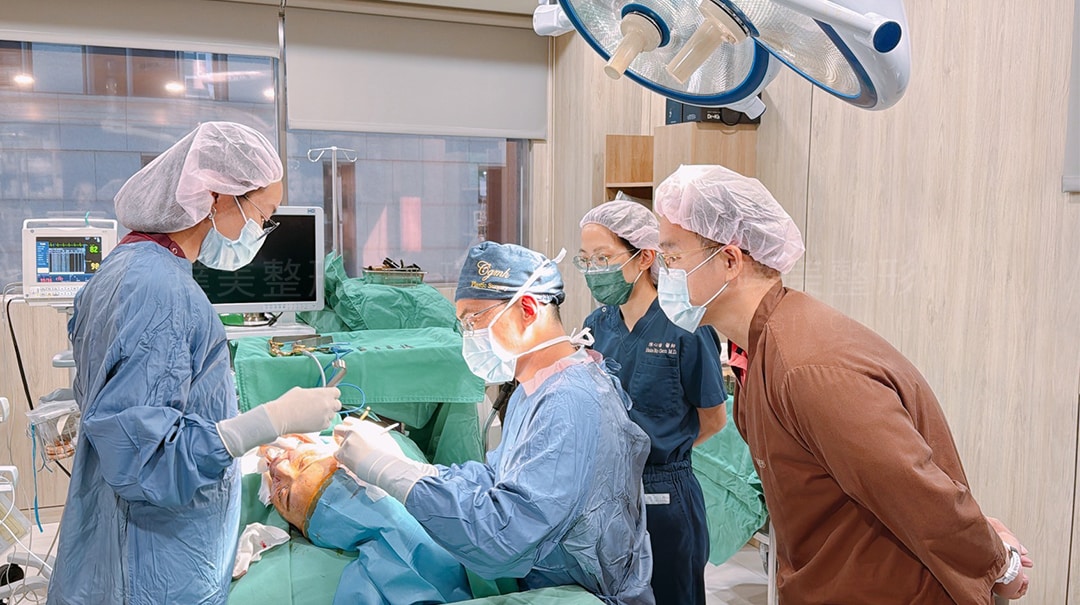
▼A team of physicians from Japan, Malaysia, and Australia took turns visiting Arsty Clinic to observe the facial rejuvenation surgery procedure. ▼