Achieve a full and natural-looking ideal bust: Doctors provide a professional analysis of the 5 major advantages of autologous fat transfer breast augmentation!
Autologous fat transfer for breast augmentation
Autologous fat transfer for breast augmentation case Applicable to Advantages of autologous fat transfer for breast augmentation Key to success Frequently Asked Questions Online consultation
A chart compiled by Dcard users, titled "Taiwanese Women's Height/Breast Size PR Ratio Comparison," shows that the most common average breast size for Taiwanese women is C-cup. However, many women around us are troubled by flat or small breasts. Therefore, breast augmentation surgery remains a popular cosmetic procedure, with autologous fat transfer often being the preferred choice. Why is that? If you are also troubled by small breasts and wish to increase your cup size, don't miss this article!
Breast augmentation surgery is divided into two types:"Jelly Breast Augmentation" Surgery with Implanted Breast Prostheses及Breast augmentation using autologous fat transferDifferent types of breast augmentation are suitable for different groups. For most people who want breast augmentation, autologous fat transfer is obviously more popular. This is because autologous fat transfer has obvious advantages. It can meet the postoperative expectations of patients for both breast augmentation and body slimming, and it can avoid the troublesome process of massage required after implantation. This is a great incentive for busy new mothers who need breast augmentation after childbirth. Moreover, the filler is their own fat, so there will be no problem of body rejection. These multiple advantages have made it popular among many women today.
But is autologous fat transfer for breast augmentation truly perfect, risk-free, and suitable for everyone? How can one improve fat survival rate? Next, a specialist in breast augmentation, lift, and reduction will explain.Dr. Yang Shanchun, Arsty ClinicA professional analysis of the advantages of autologous fat transfer for breast augmentation.
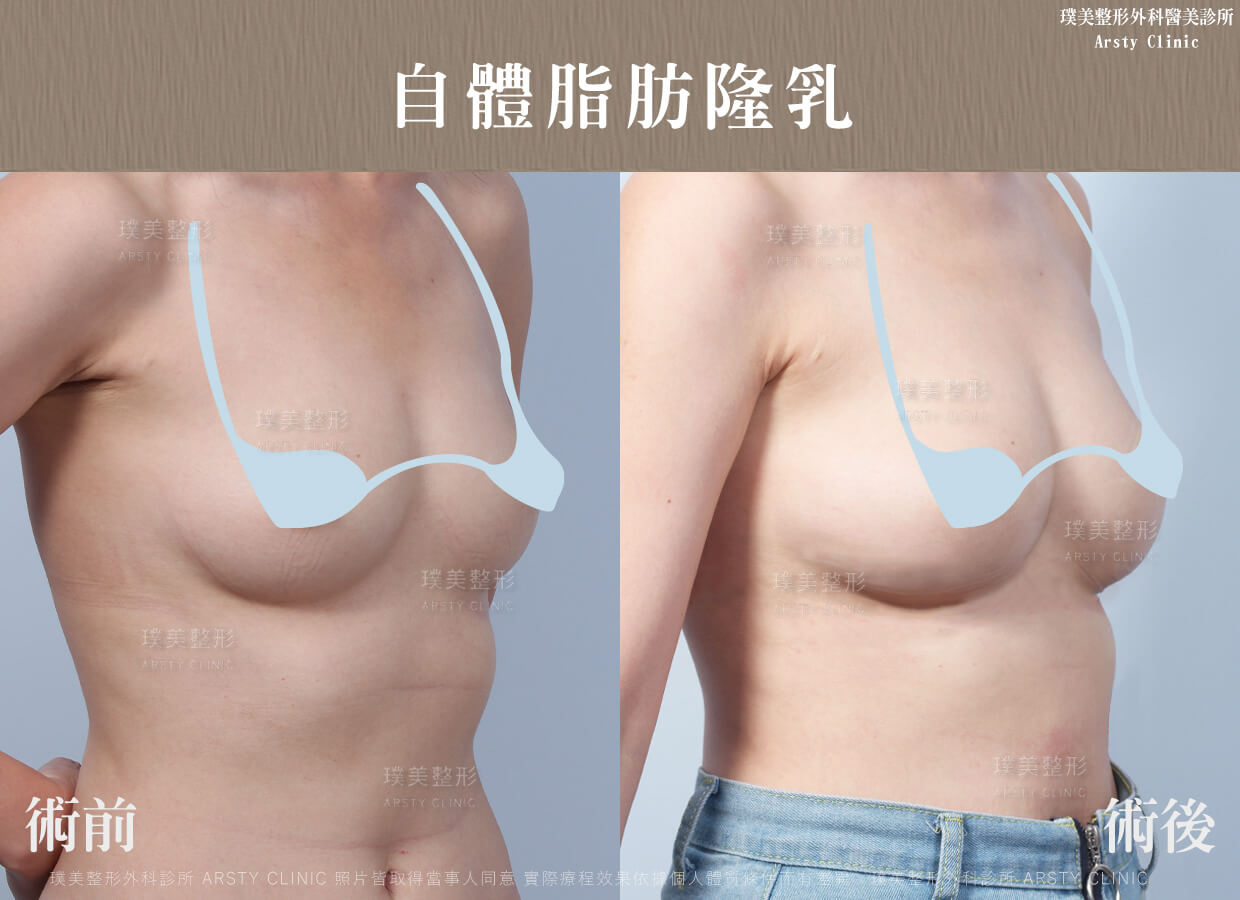
Autologous fat transfer for breast augmentation caseFat Graft for Breast Augmentation Case

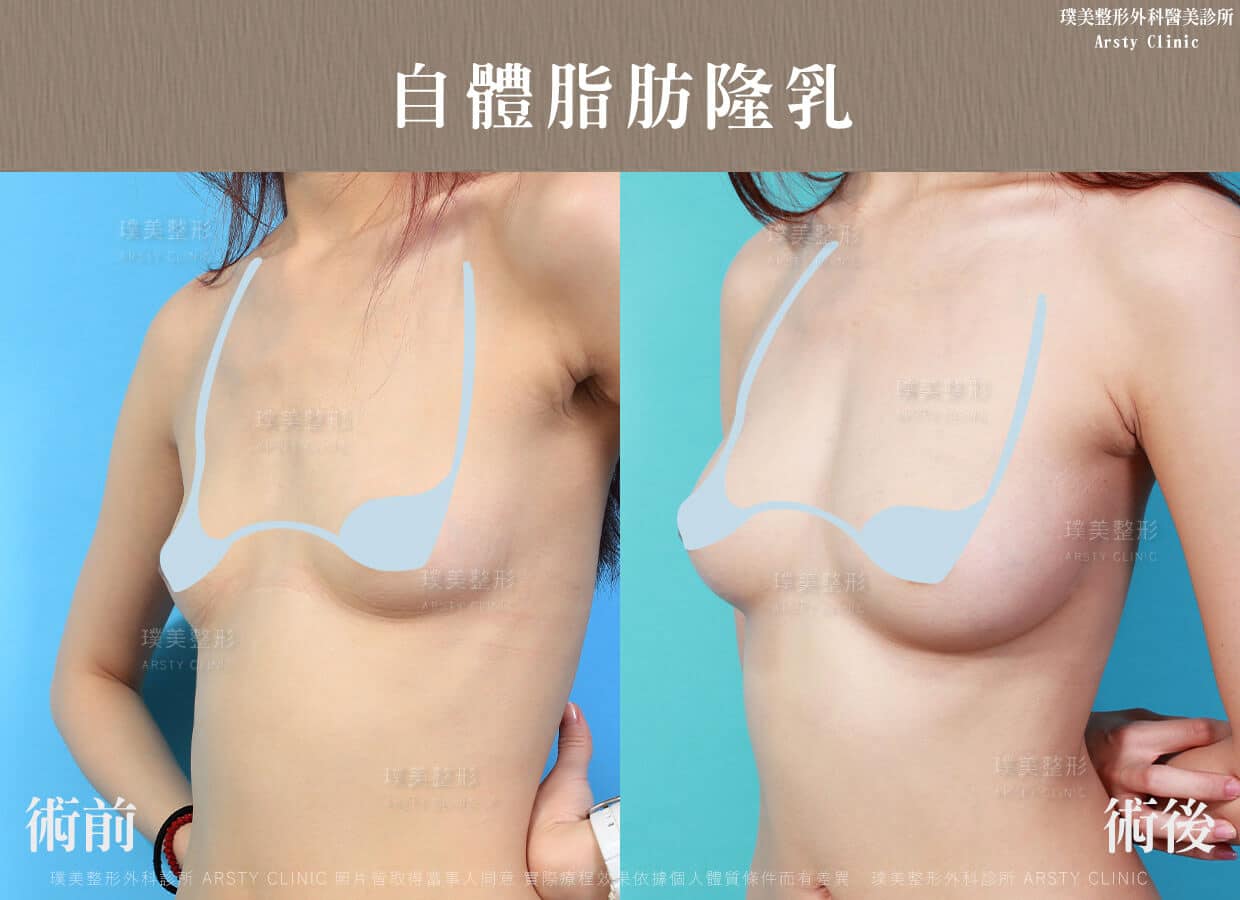
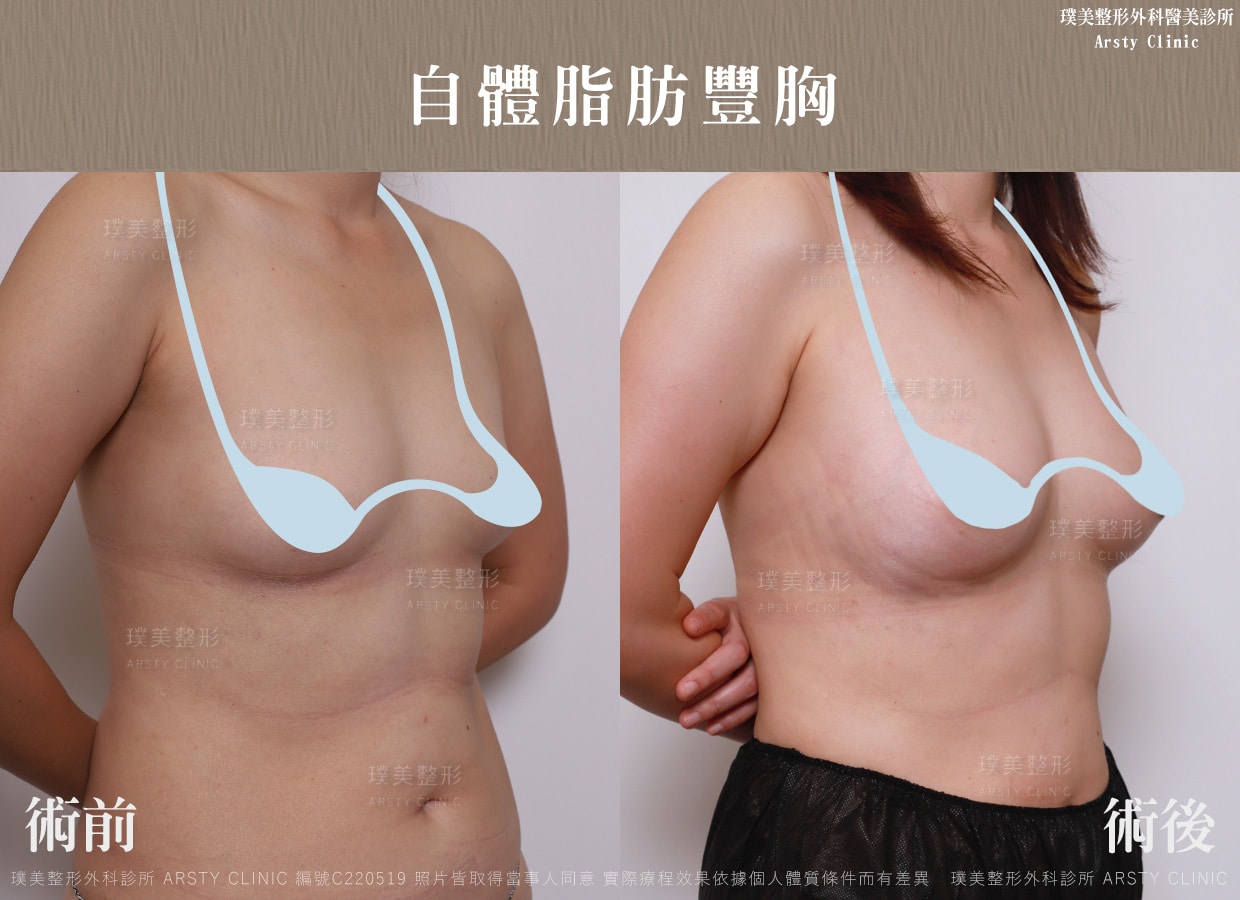
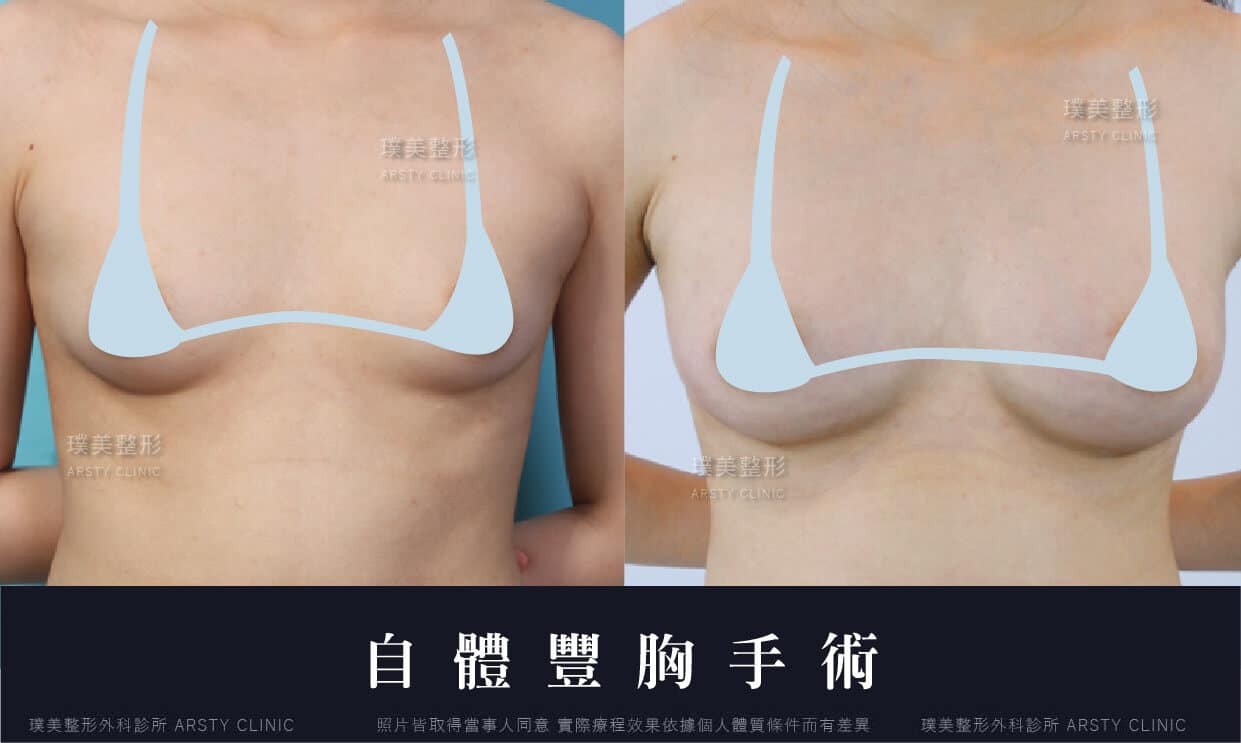

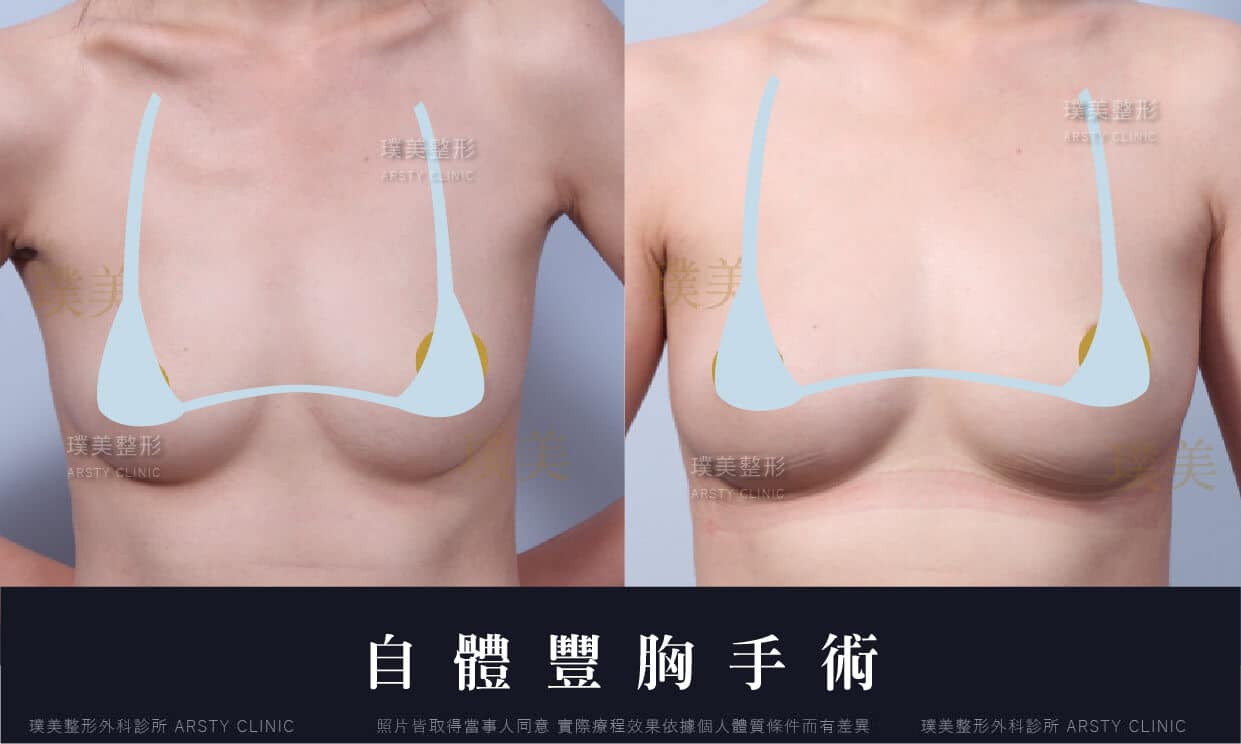
Suitable candidates for autologous fat transfer breast augmentation
Autologous fat transfer for breast augmentation is suitable for women who are already well-endowed (B cup or larger)!
Before understanding the advantages of Fat Graft for Breast Augmentation, let's first understand what body types are best suited for this procedure. As the name suggests, because it involves filling the breasts with fat...Ideally, the patient should not be too thin.Sufficient body fat is necessary to facilitate liposuction from areas where fat tends to accumulate (such as the abdomen, saddle hips, or thighs). If someone is very thin and insists on liposuction, the treated area may become uneven, and the originally smooth lines may become rough.
Additionally, individuals with a slender build may have tight breast skin, limiting the amount of fat that can be implanted and making it difficult to achieve the desired breast enhancement effect. Furthermore, the fat is less likely to survive post-surgery due to a lack of nutrition, resulting in poor breast augmentation outcomes.Therefore, people with flat chests or those who wish to have breast augmentation are not suitable candidates for autologous fat transfer.。
Considering the above factors, the following groups are suitable candidates for autologous fat transfer breast augmentation:
- For those who want to increase their breast size by about 0.5 to 1.5 cup sizes with one surgery (if you want to increase your breast size by more than 2 cup sizes in one surgery, it is recommended to choose jelly breast augmentation),
- Slight sagging, looseness, or outward expansion of the breasts can be corrected and improved through autologous fat transfer breast augmentation.
- For those who already have breasts but whose breasts are not full enough (this can be adjusted and improved through autologous fat transfer breast augmentation).
- Postpartum/excessive weight loss can cause breast atrophy (postpartum breast skin is relatively loose, making it quite suitable for fat grafting).
- It has sufficient body fat.
Five Advantages of Autologous Fat Breast Augmentation
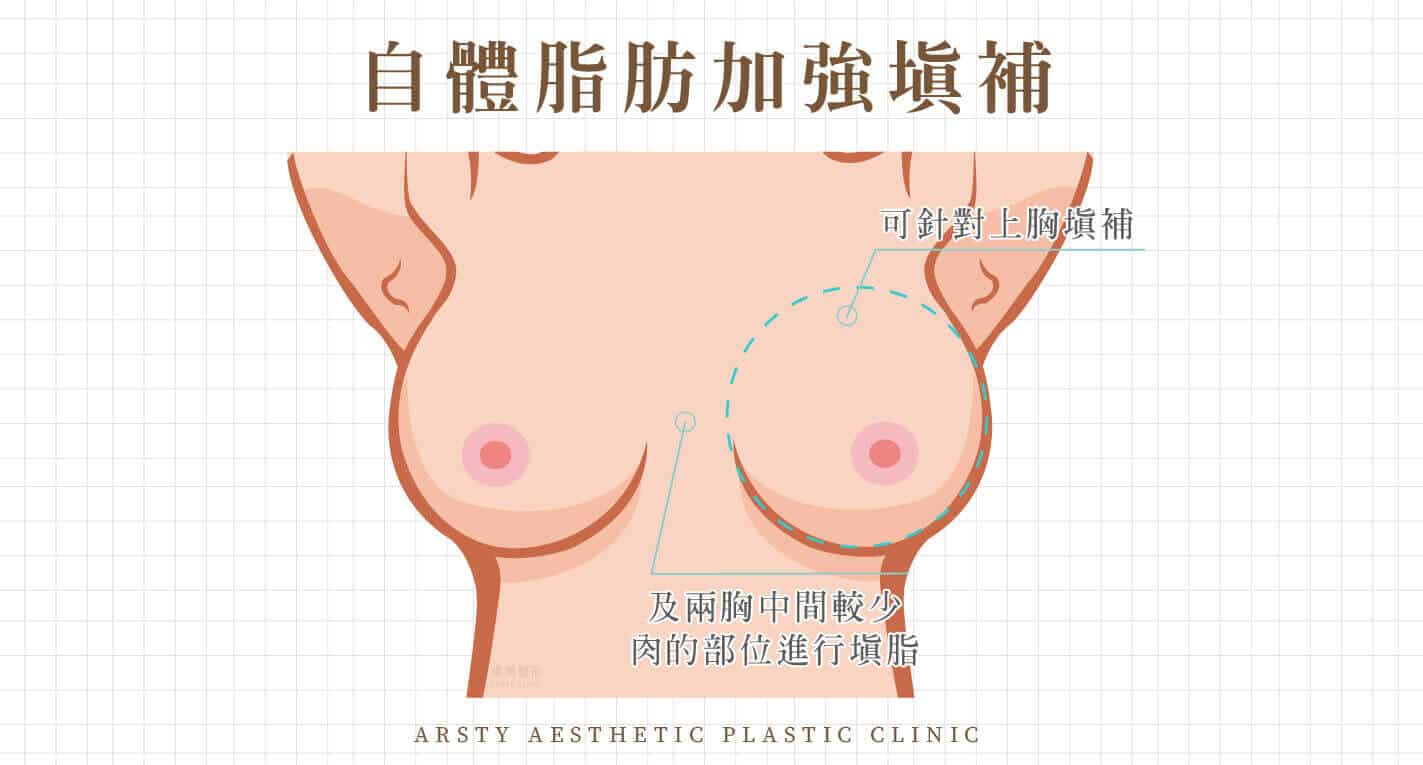
I. Liposuction and breast augmentation: sculpting your figure in one go.
Autologous fat transfer for breast augmentation, as the name suggests, involves extracting excess fat from areas of the body with more fat, such as the waist, abdomen, and thighs. After processing with centrifugation and purification techniques, healthy fat cells are evenly injected into the subcutaneous and fat layers of the breasts where augmentation is needed, resulting in "real" beautiful breasts! For Taiwanese women who are averse to a fleshy figure, this can be considered the most advantageous feature.
Second, the surgery has low risk and is not likely to cause bodily rejection or capsular contracture.
The material used for breast augmentation is taken from the patient's own fat. Since it is the patient's own fat, the body will not have any rejection issues. Compared to silicone gel breast augmentation, there is no need to worry about the complications of capsular contracture. Moreover, once the fat has stabilized and survived, the breasts can also present a natural and soft touch, a drooping feel, and a bouncy feel, just like naturally born real breasts.
Third, the procedure is convenient: it leaves no visible scar and requires no post-operative massage, making it suitable for busy women.
No scars!Unlike implant breast augmentation, which requires an incision to insert the prosthesis, Fat Graft for Breast Augmentation only involves liposuction and injection filling, leaving small scars of only about 2-3mm that are not easily noticed by outsiders. Postoperative recovery is fast, allowing for a quicker return to normal life.
No massage is needed after the procedure!Since it does not cause capsular contracture, there is no need for postoperative massage, which is why many postpartum mothers choose autologous fat transfer for breast augmentation. After all, when facing the self-confidence setback of postpartum body shape changes, and at the same time taking care of children and even going to work, autologous fat transfer for breast augmentation, which is convenient to care for and does not require postoperative massage, is certainly a plus.
IV. Customized breast shaping for an even more beautiful bust!

V. Realistic touch, as if naturally formed
Because it's your own fat, the shape is natural after transplantation into the breasts. You don't have to worry about it looking unnatural like traditional silicone or saline implants. The feel is the same as your original breasts, with a natural droop and movement. There are no obvious flaws like "fake breasts" that are too hard or have an obvious shape.

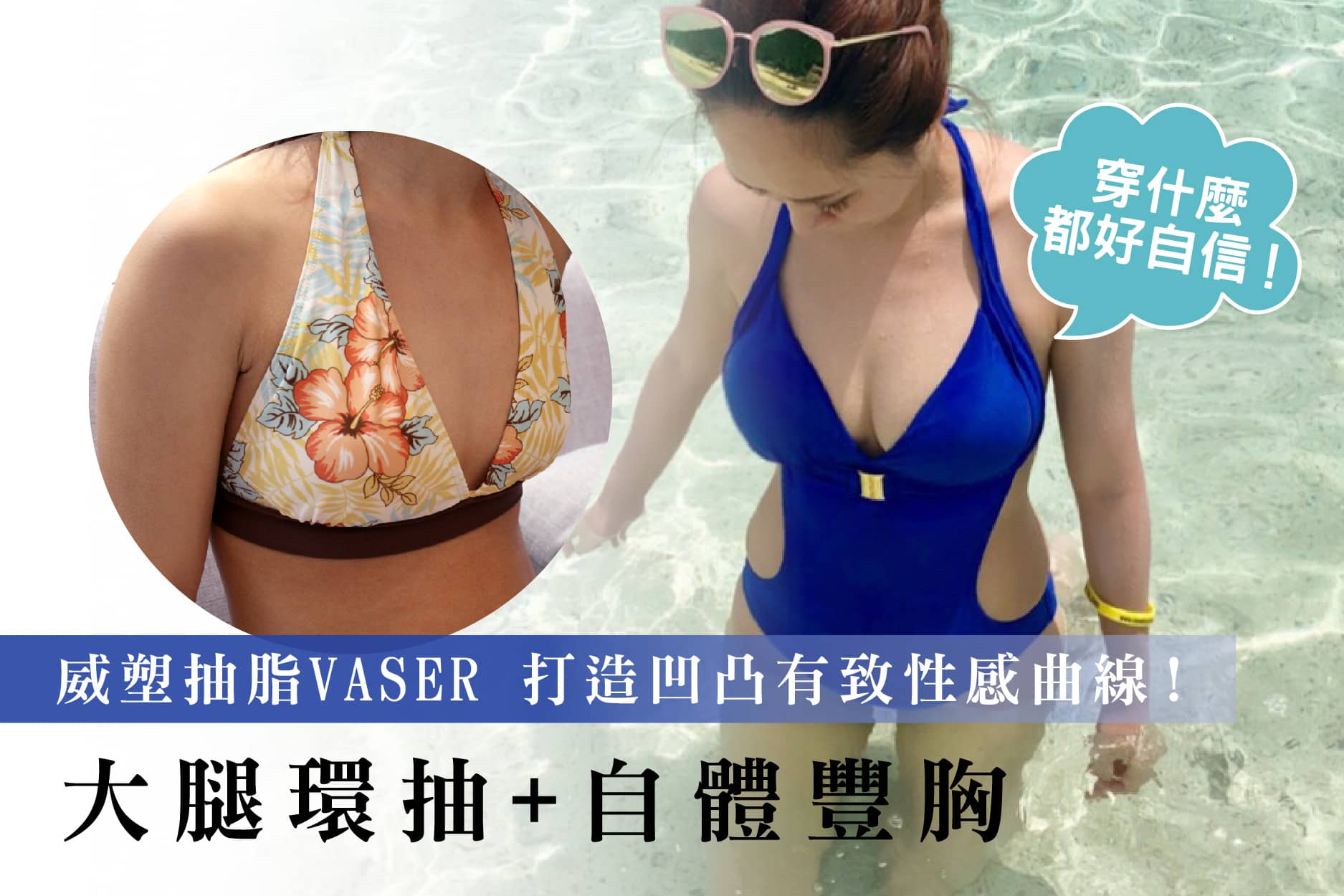

The key to successful autologous fat transfer breast augmentation
Limitations of autologous fat transfer for breast augmentation
As I've repeatedly emphasized, the best breast augmentation method is the one that's "suitable" for you! Although autologous fat transfer for breast augmentation seems like a perfect procedure, there are actually limitations.It's not suitable for everyone, and the effects are not the same for everyone.Ultimately, it depends on the patient's own condition. Otherwise, the breast augmentation effect may not be obvious after surgery, or more serious problems may occur such as lumps, inflammation and infection. Therefore, a detailed preoperative evaluation by a professional doctor is needed to determine whether it is suitable.
The following conditions need to be considered:
>>Whether you have enough body fat: Women who are too thin and want to increase their cup size by three sizes will face the problem of "limited material". Therefore, their own conditions and expectations are closely related to whether they can undergo Fat Graft for Breast Augmentation.
>>The elasticity and tightness of the skin: If it is a young girl who has no experience of pregnancy, breastfeeding, or weaning, her skin is naturally tight and the capacity to hold fat is relatively small. Even if more fat is added, if there is not enough space, the effect will still be limited (a single surgery can only increase the size by 0.5 to 1.5 cups). If you want to increase the size by more than two cups, you should consider undergoing a second surgery.
Conversely, if a postpartum mother has noticeably loose skin and ample breast space, she may gain two cup sizes with just one surgery!
>>Do you have a family history of breast cancer? People with a family history of breast cancer are not advised to undergo Fat Graft for Breast Augmentation surgery. A breast ultrasound must be performed before the surgery to determine their health status.
Survival rate of autologous fat grafting
"Dr. Yang, after an Fat Graft for Breast Augmentation surgery, will all the fat be lost?"
Women who have researched autologous fat grafting likely know that the key to successful breast augmentation lies in the "fat survival rate." Medical advancements have been rapid, leading to the development of numerous techniques to improve fat quality and injection methods to increase survival rates, resulting in significant improvements. However, post-operative fat survival rates vary from person to person, and currently, there are no pre-operative examinations that can predict an individual's survival rate.
The survival rate of fat cells after surgery is related to individual physique, sleep status, nutrition intake, and postoperative care. It is recommended to maintain the weight at the pre-surgery level, or even gain a little more than one or two kilograms, which can help improve the survival rate!
Learn about the advantages of composite breast augmentation: improved breast shape, softness, and feel!
Common problems with autologous fat transfer for breast augmentation
Q. How long does it take for the fat to stabilize after autologous fat transfer breast augmentation? What is the survival rate?
The fat tends to stabilize about 3 months after the surgery, whileFat survival rate varies from person to person, generally ranging from 30% to 70%. Good postoperative care can help improve the fat survival rate, so postoperative care is also the key to the success of autologous fat grafting surgery. The importance of postoperative care should not be ignored.
Q. How many cup sizes can I increase in size with autologous fat transfer breast augmentation in one session?
The results of Fat Graft for Breast Augmentation cannot be as precise as those of jelly-based breast augmentation because it uses natural materials, and the fat survival rate cannot reach 100%. Therefore, the amount of fat transferred is not fixed. Generally speaking, unless the patient's original condition is unfavorable for Fat Graft for Breast Augmentation, a single procedure can increase the size by more than one cup size, and there are many cases where it can increase the size by two cup sizes.
Q. Will all the extracted fat be used to fill in the breasts?
Basically, no, because the extracted fat needs to be purified by centrifugation before being injected into the breast. If the skin is too tight and there is not enough space, injecting too much fat at once can easily reduce the survival rate of the fat, and may even cause the breast fat to calcify, which would be counterproductive.
Q. Will breast augmentation with autologous fat transfer affect breastfeeding?
No, because the injection site will avoid the breast tissue, so you can breastfeed normally after the procedure.
Q. How long does it take to wait for a second autologous fat transfer breast augmentation?
You need to wait until the previous fat has stabilized before you can have another surgery. It is usually recommended to wait 3 to 6 months before having another surgery.
Q. Will autologous fat transfer for breast augmentation cause calcification? Will it affect breast cancer screening?
If too much fat is injected at once, there is indeed a possibility of calcification. Therefore, if you want to significantly increase your cup size, it is recommended to have the surgery done in stages, or choose silicone gel breast augmentation.
Q. Should I choose jelly breast augmentation or autologous fat breast augmentation?
The best approach is to consult a professional plastic surgeon, discuss your needs together, and choose the most suitable breast augmentation procedure for you. However, if you are very thin and don't have much excess fat, you can rule out breast augmentation with autologous fat transfer.