Plastic Surgeon Debunks Myths About Accessory Breasts! Are Accessory Breasts Related to Ill-fitting Bras? [Plastic Surgeon - Dr. Hsin-Yu Chen]

What is accessory breast tissue? How can accessory breast tissue be effectively eliminated? What are the ways to eliminate accessory breast tissue? Many women are troubled by the two protruding lumps of accessory breast tissue under their arms when wearing bras or sleeveless clothes. Whether wearing a bikini in the hot summer or a sexy off-shoulder dress on an important occasion, they can only worry that the accessory breast tissue under their arms will embarrassingly show up again, making them just want to get rid of it as soon as possible.
Causes of accessory breasts:
There are eight pairs of mammary gland primordia, but only the pair on the chest develops into true breasts; the others gradually degenerate. If this degeneration is incomplete, extra breasts will form after birth, which is called accessory breast or polymastia. The incidence of accessory breasts is about 2-6% in women and about 1-31% in men, with a particularly high incidence in Asians. Accessory breasts can occur anywhere along the mammary line, most commonly in the anterior axillary margin and armpit, but remnants of accessory breasts can actually be found from the chest wall to the abdominal wall.
What is accessory breast tissue?
These are underdevelopedTrue accessory breasts are further divided into three types.:
(1) It has mammary gland tissue and a nipple, and is the most complete accessory breast.
(2) There are mammary glands but no nipples, the most common type of accessory breast.
(3) There is no mammary gland but there is a nipple. This is the least common. Accessory breasts with mammary gland tissue are usually firmer under the influence of hormones. Another type is pseudo-accessory breasts, which are only fat, without mammary glands or nipples. This is usually due to obesity and excessive fat cells accumulating there. They usually feel soft and loose to the touch.

True accessory breasts, like normal breasts, contain mammary glands that fluctuate with female hormone levels. For example, they may undergo cyclical changes before and after menstruation, during the use of hormonal medications, and during pregnancy and breastfeeding. Mothers who have experienced pregnancy and breastfeeding often have a deep understanding of the experience with accessory breasts. Many only discover their accessory breasts contain mammary gland tissue at this time. Under the stimulation of prolactin, not only do normal breasts swell, but accessory breasts also swell, often swelling into a hard, round lump under the armpit. Accessory breasts with nipples may secrete milk, but the worst is when there is no nipple outlet. Those who have been breastfeeding know the unbearable pain and embarrassment of not being able to push it away. The milk, unable to be expressed, can only be slowly absorbed, potentially causing redness, inflammation, and infection. Furthermore, like normal breasts, the mammary glands in accessory breasts can also develop mastitis, benign lumps, or malignant changes.Once we understand the different components that cause accessory breast tissue, we can treat the symptoms accordingly:
True accessory breasts:
Accessory breast tissue is benign and does not necessarily need to be removed, but if it causes problems with appearance and daily life, it can be improved through surgery.
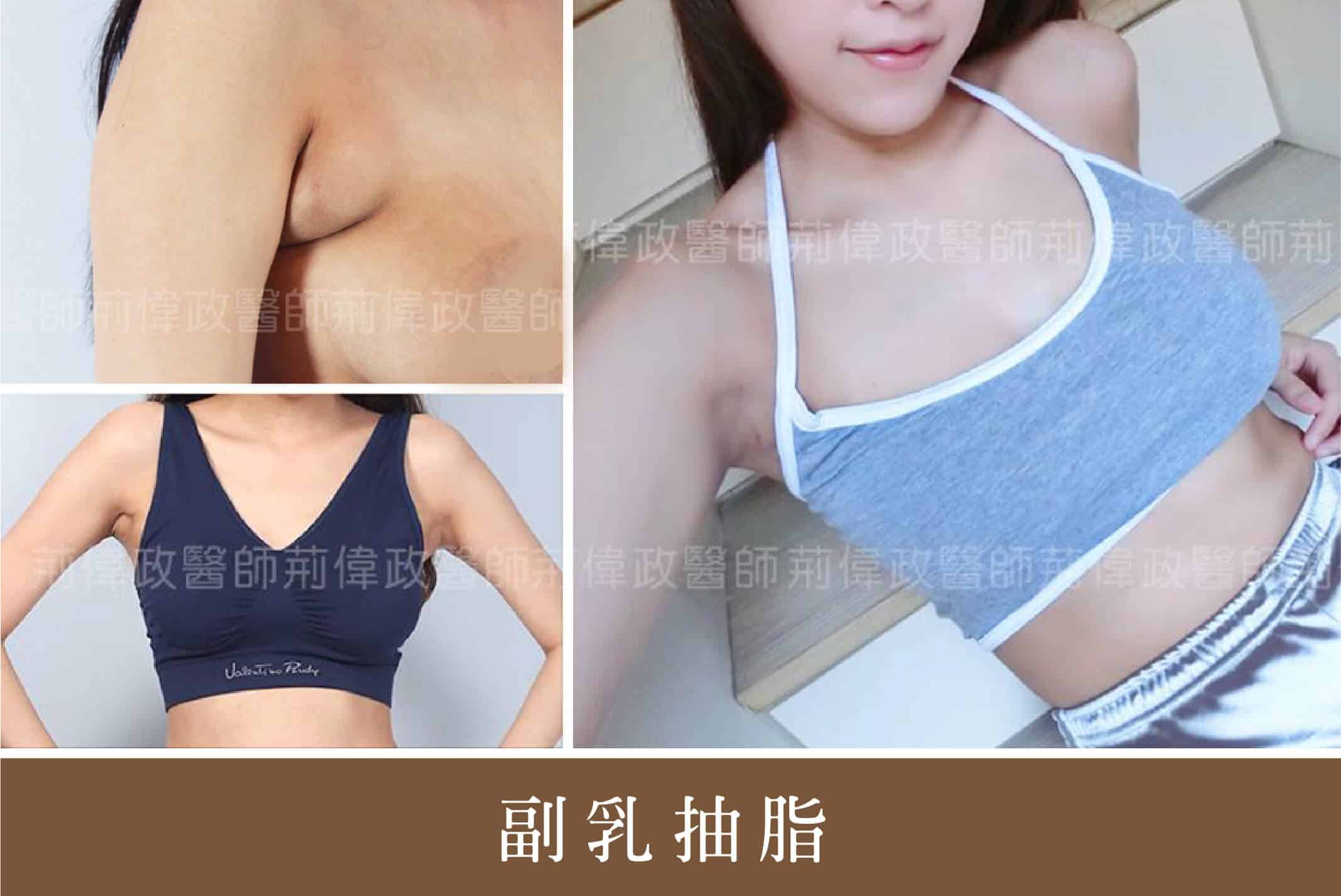
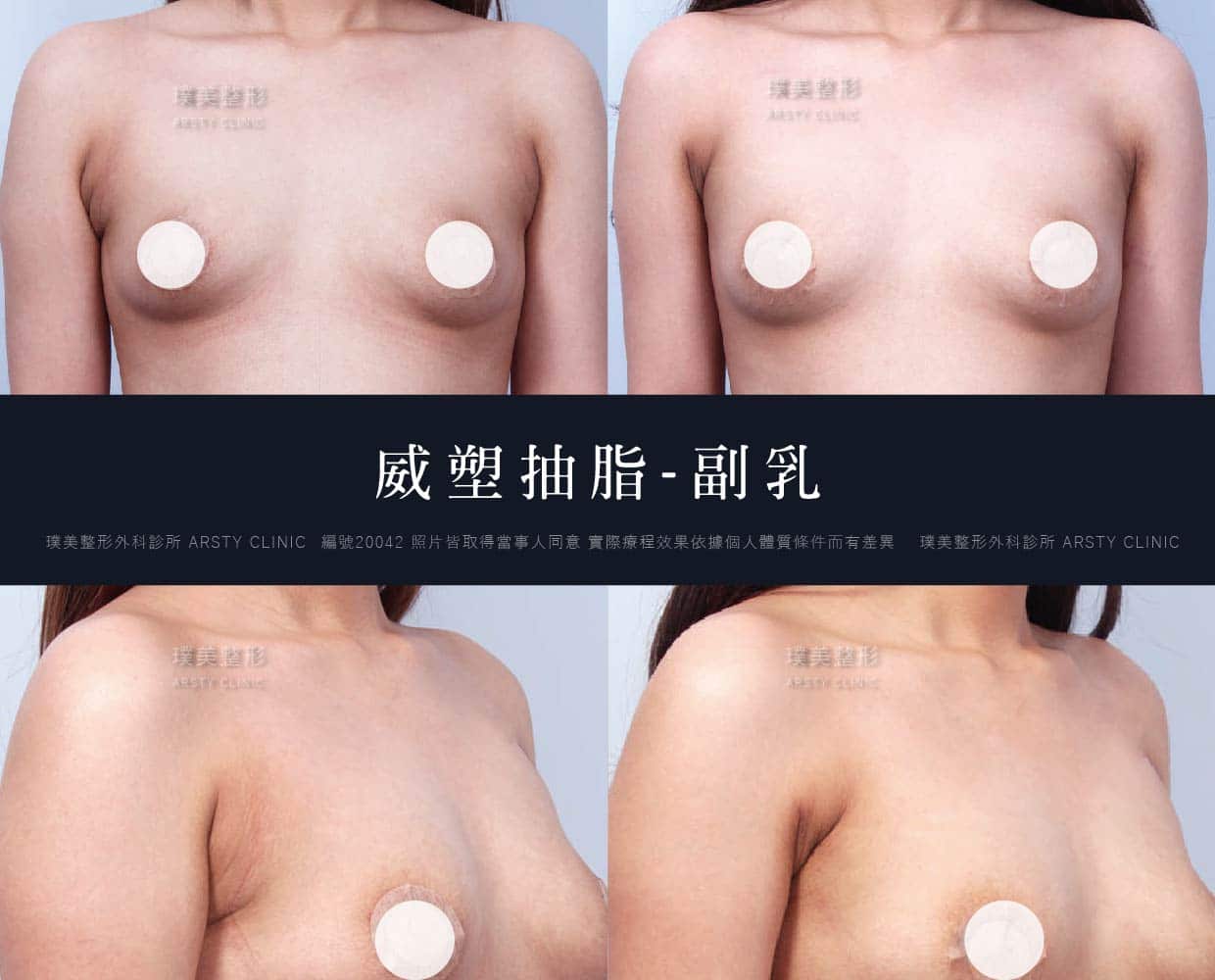
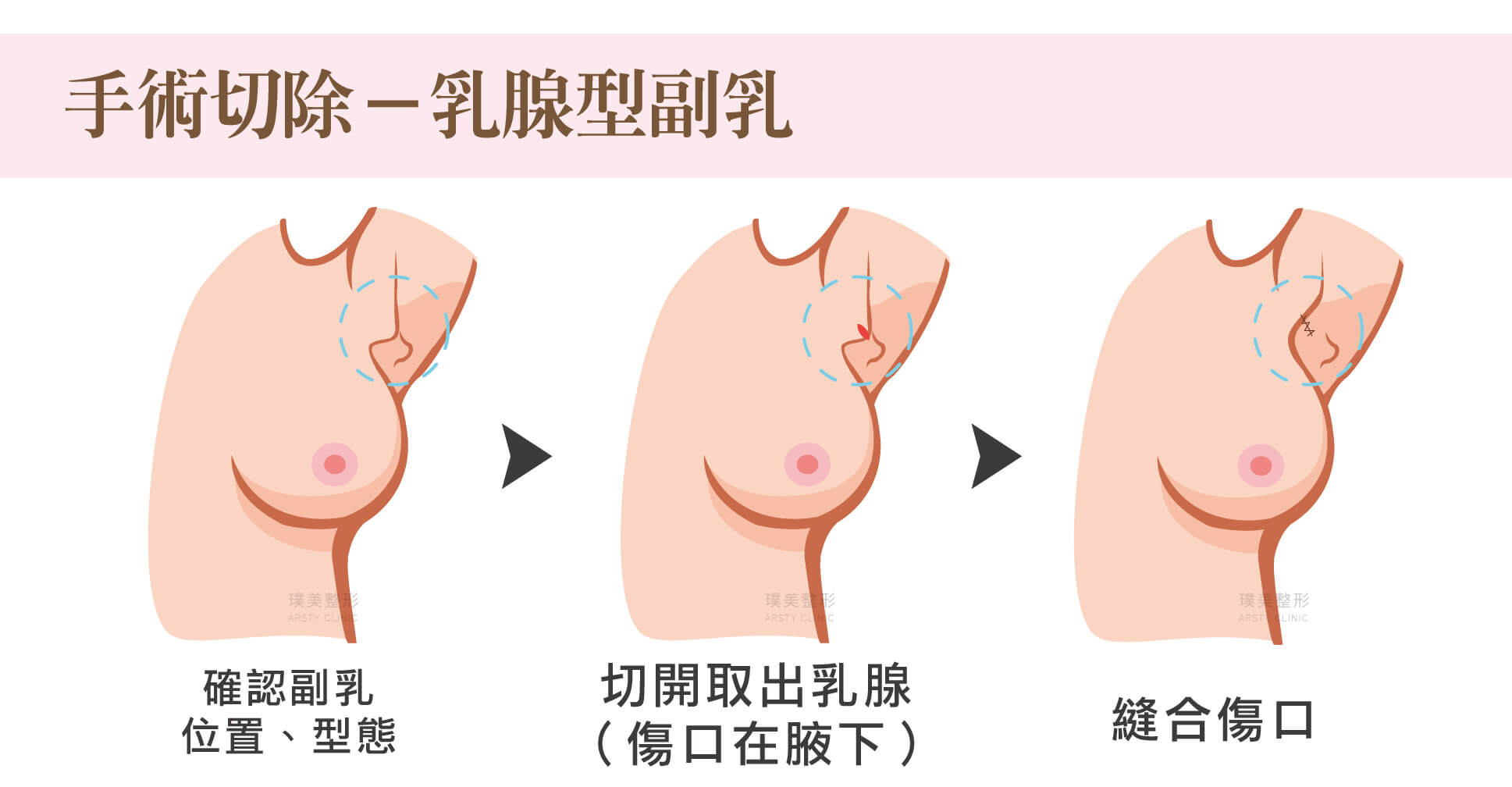
- If there are no accessory nipples or areolas, and the breast tissue is sparse and loose, minimally invasive liposuction can be used to address this. The surgery involves making a 0.5 to 1 cm incision in the armpit crease and using instruments such as powered liposuction or ultrasonic liposuction to effectively remove excess tissue, achieving satisfactory results.
- If it is necessary to remove both the accessory nipple and areola, or if the accessory breast is large, the breast tissue is dense and firm, and there is loose skin with excess skin, then surgery may be necessary. The length of the surgical incision depends on the location and size of the accessory breast. The breast tissue can be directly removed, and excess skin can be treated to prevent future sagging.
Pseudo-accessory breasts:
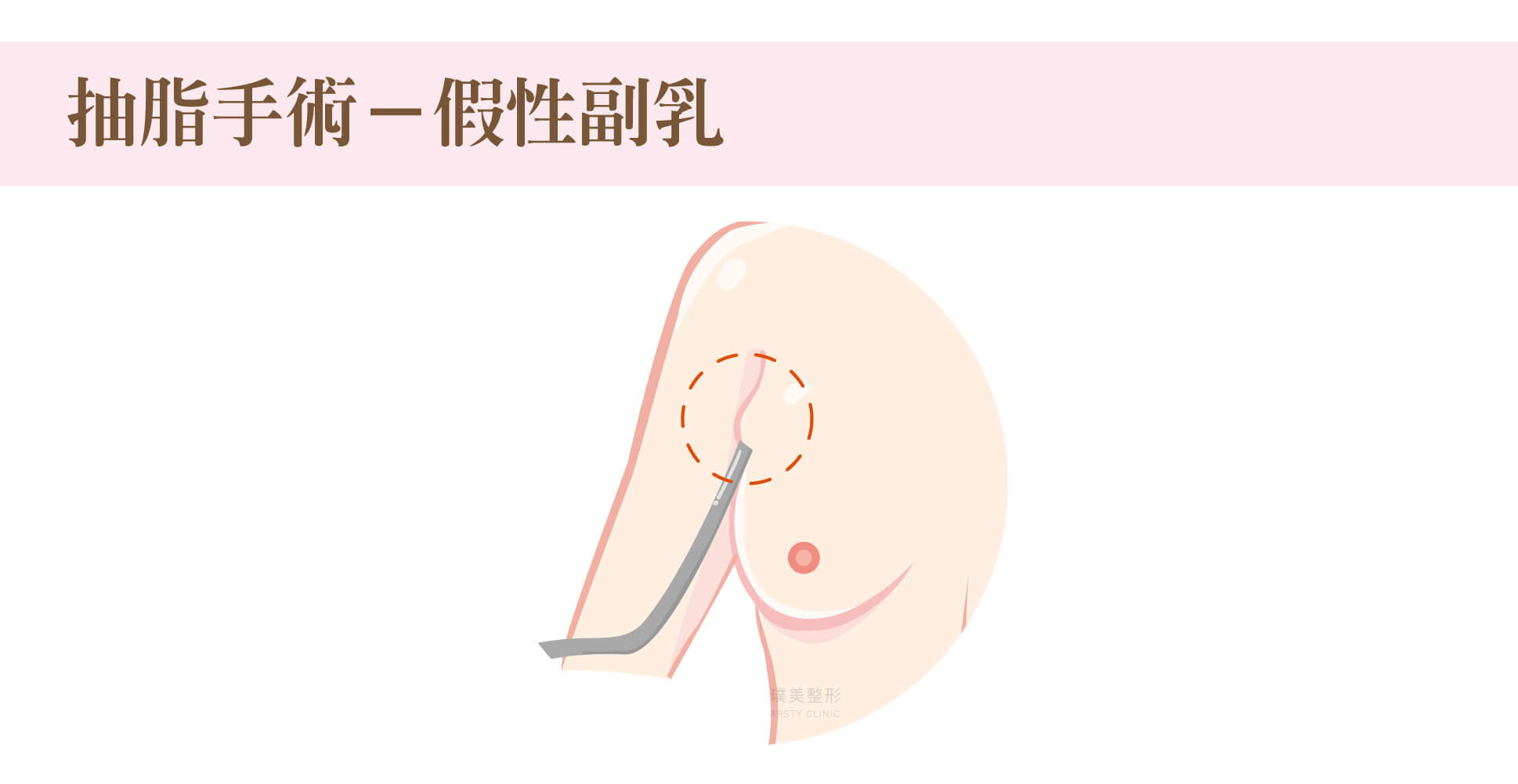
Through minimally invasive liposuction, we make a 0.5 cm incision under the armpit and use a liposuction instrument to remove excess fat. It can be combined with arm liposuction to remove "bye-bye sleeves" and sculpt the upper limbs and underarm curves to make them firm and attractive.
Now that we've covered this, we can work together to debunk some common myths about accessory breasts and help those women who have been wrongly accused.
How to effectively dispel myths about accessory breasts:
1. Does having accessory breast tissue always mean you're not wearing a bra properly?
mistake.
This is what sales staff often say: "Try adjusting it, and the accessory breast tissue under your armpit will temporarily stay in the cup, making it seem like it's temporarily gone. But usually, with a little movement, it will return to its original position, hanging freely on both sides of the bra. Accessory breast tissue located in the armpit, however, will probably never fit into the cup, no matter how much you try to stuff it in." True accessory breast tissue is simply displaced breast tissue. Because its original location is not within the normal breast, no matter how much you try to stuff or squeeze it, it will remain in its original place and will not merge with the normal breast. While pseudo-accessory breast tissue is just fat, it is elastic and stubborn. Adjustable and supportive bras can only temporarily restrain accessory breast tissue; they can't hide it forever. As soon as they loosen or create a gap, the accessory breast tissue will immediately return to its original shape.
2. Can you flatten accessory breasts just by massaging them?
Mostly incorrect.
Massage is mainly effective for a small number of cases of swelling caused by poor lymphatic drainage or fluid buildup in the armpit. Excluding these causes, it may reduce the size of accessory breast tissue, but it is ineffective for most solid breast tissue and fat. If massage could make fat disappear, there would be no need for strenuous diet control and exercise.
3. Can more exercise make accessory breasts disappear? Partly true, partly false.
False accessory breasts caused by fat accumulation due to obesity can indeed be reduced and shrunk through exercise, but exercise has a systemic effect and cannot precisely target specific areas, so the degree of reduction varies from person to person. Furthermore, true accessory breasts, being breast tissue, cannot be eliminated through weight loss. Even very thin people or fitness enthusiasts may still be troubled by true accessory breasts because it's essentially a piece of fat that cannot be lost.
After learning about these points, if you are troubled by accessory breast tissue, you can consult a professional doctor to have it surgically or minimally invasively removed, addressing the specific issue and enjoying a clean and comfortable underarm area free of accessory breast tissue.
Recommended cases of accessory breast surgery