A Must-Read for Breast Augmentation: Choosing the Right Incision Site

One of the most frequently asked questions before breast augmentation surgery is the choice of surgical incision. In fact, each surgical incision has its advantages and disadvantages. Choosing the right incision to achieve the desired breast augmentation while avoiding unnecessary complications is key to a successful surgery. Before analyzing various incision options, we must first understand the following two facts:
- Asians are generally more prone to problems such as melanin deposition and keloids, but with proper postoperative care, the scars will disappear.
- If you choose a silicone implant of around 300 cc, it is recommended that the incision length be four centimeters to avoid implant rupture and poor wound healing.
The advantages and disadvantages of various main incision methods are analyzed below:

Breast augmentation incision - beside the areola (periareolar)
Advantages: The surgical field is wide, and breast lift or areola reduction surgery can be performed simultaneously as needed. The position of the inframammary fold can be located during the operation as needed.
Disadvantages: It is generally believed that the risk of infection is slightly higher. The incision is made around the areola, and postoperative scar care is required.
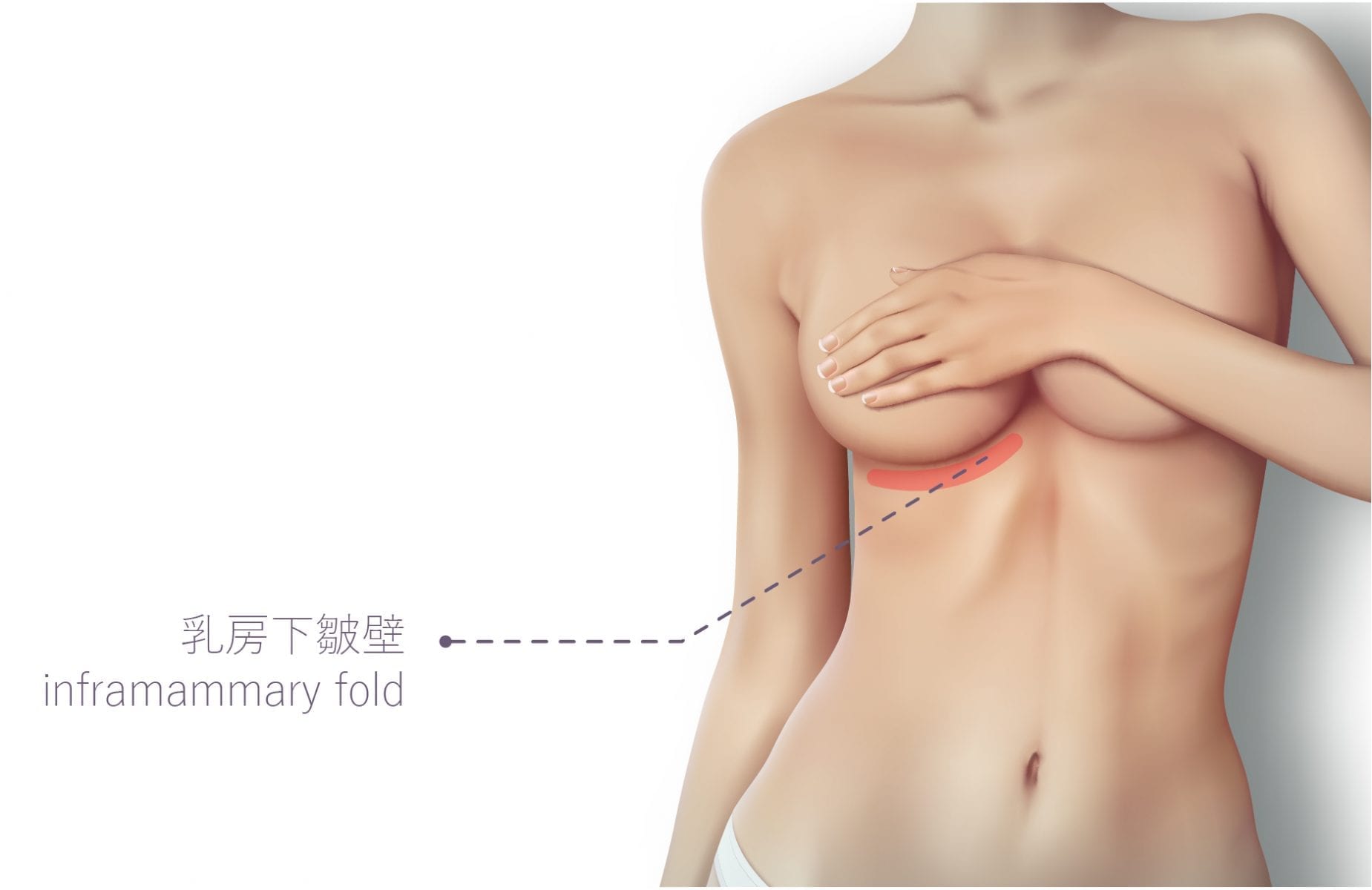
Breast augmentation incision – inframammary fold
Disadvantages: Careful preoperative positioning is required to confirm the location of the inframammary fold. Postoperative scar care is necessary.
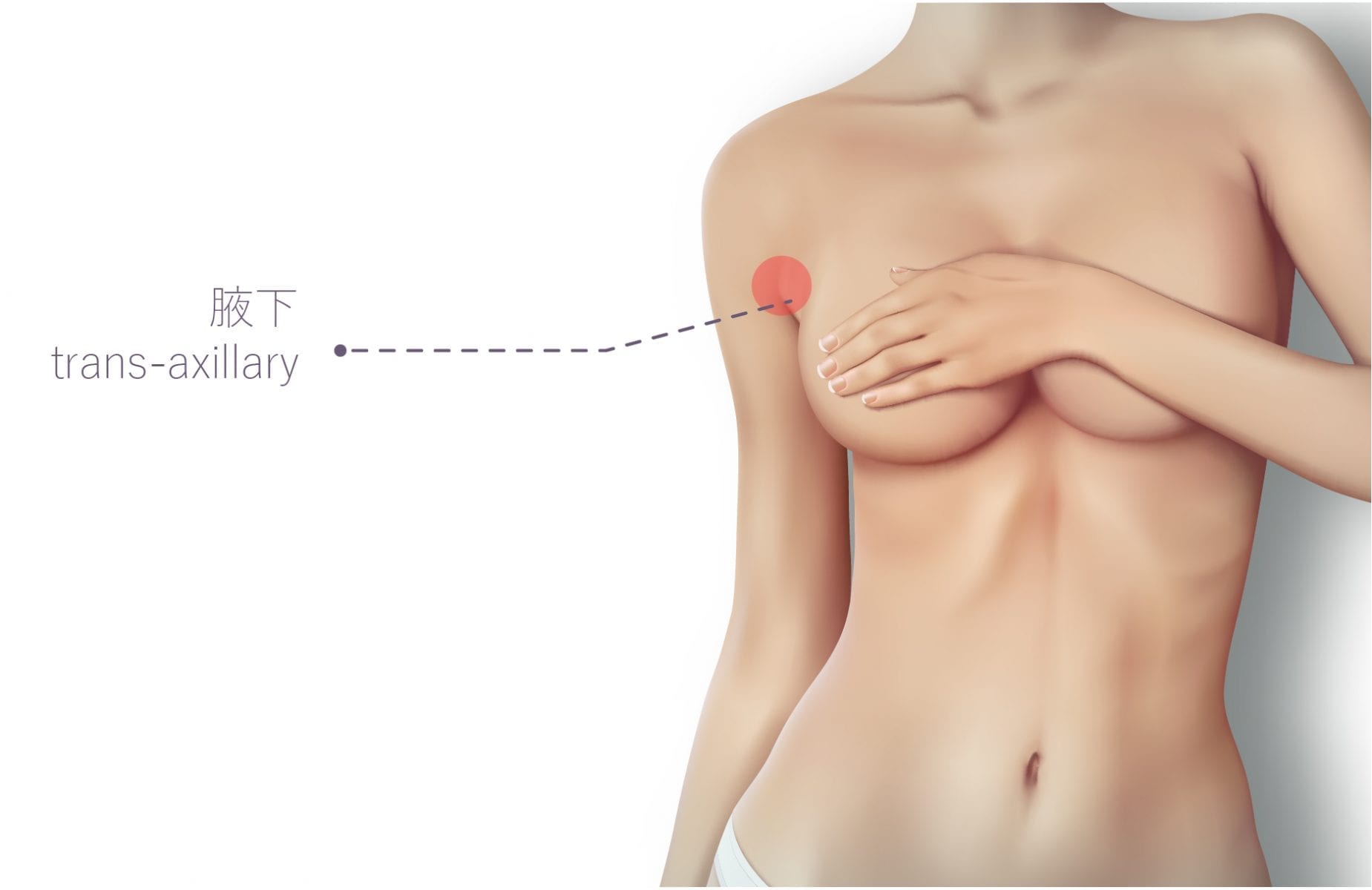
Breast augmentation incision – trans-axillary
The surgical incision is designed to be located in the crease under the armpit, and it is recommended to perform the surgery using an endoscope. The postoperative incision will be hidden within the armpit crease.
Advantages: The incision is easy to hide, there is no scar on the chest, and the position of the inframammary fold can be located during the operation as needed.
Disadvantages: Endoscopic surgery is required, therefore the operation time is relatively long. This incision is suitable for primary surgery rather than revision surgery.
In summary, it seems that every surgical incision has its advantages and disadvantages; there is no perfect incision. In my experience, for first-time breast augmentation surgery, I recommend endoscopic surgery through the armpit. Although it takes longer, it avoids leaving scars on the chest skin and prevents unnecessary trouble.
Mando Water Drop Breast Augmentation Creates Natural-Looking Teardrop-Shaped Breasts