


[REME] Vulvar hypertrophy and frequent infections! Dr. Hsin-Yu Chen discusses labiaplasty, resolving inflammation and laxity.
The images and text are quoted from [source].REME
As societal attitudes become more open, modern women are paying increasing attention to the health and appearance of their intimate areas, in addition to facial and body care. Excessively long or thick labia minora not only detract from aesthetics but can also significantly impact daily life, leading to problems such as discomfort from friction while walking, difficulty in cleaning, and the risk of infection and inflammation. REME Travel InvitationDr. Hsin-Yu ChenThis article explains the features of the "Labia Minora Reshaping Surgery" which addresses intimate area concerns. When combined with "VOTIVA Butterfly Radiofrequency," it further helps to tighten and plump the area, eliminating worries about the vulva!
(>>Learn about intimate area cosmetic surgery - labia minora reduction/labia majora augmentation)
What causes vulvar hypertrophy? Is it related to sexual experience?
Many people believe that thickened or excessively long vulva is related to rich sexual experience, but this is not the case. The length and thickness of the vulva mainly depend on congenital factors, while roughness or darkening of the labia majora and minora may be affected by acquired factors, such as frequent cycling or wearing tight underwear for a long time, which can cause excessive friction and lead to rough skin or pigmentation in the private area.
▍Can thickened or excessively long labia minora cause vaginal infections?

When the vulva is too long and bathing is not done properly, it can indeed easily cause inflammation of the vulva. Some patients also have a lot of hair, which leads to infection due to neglecting hygiene details. However, if you usually do a good job of cleaning, there is no need to worry. Therefore, the two are not directly related but are related.
When patients experience recurring infections in their private parts, doctors will first check their lifestyle habits and identify the state and color of the discharge. It may also be related to poor vaginal mucosal health, rather than being caused by thickened or overly long labia minora.
▍Labia Minora Reshaping – Labia Minora Reduction Surgery can solve your problems!
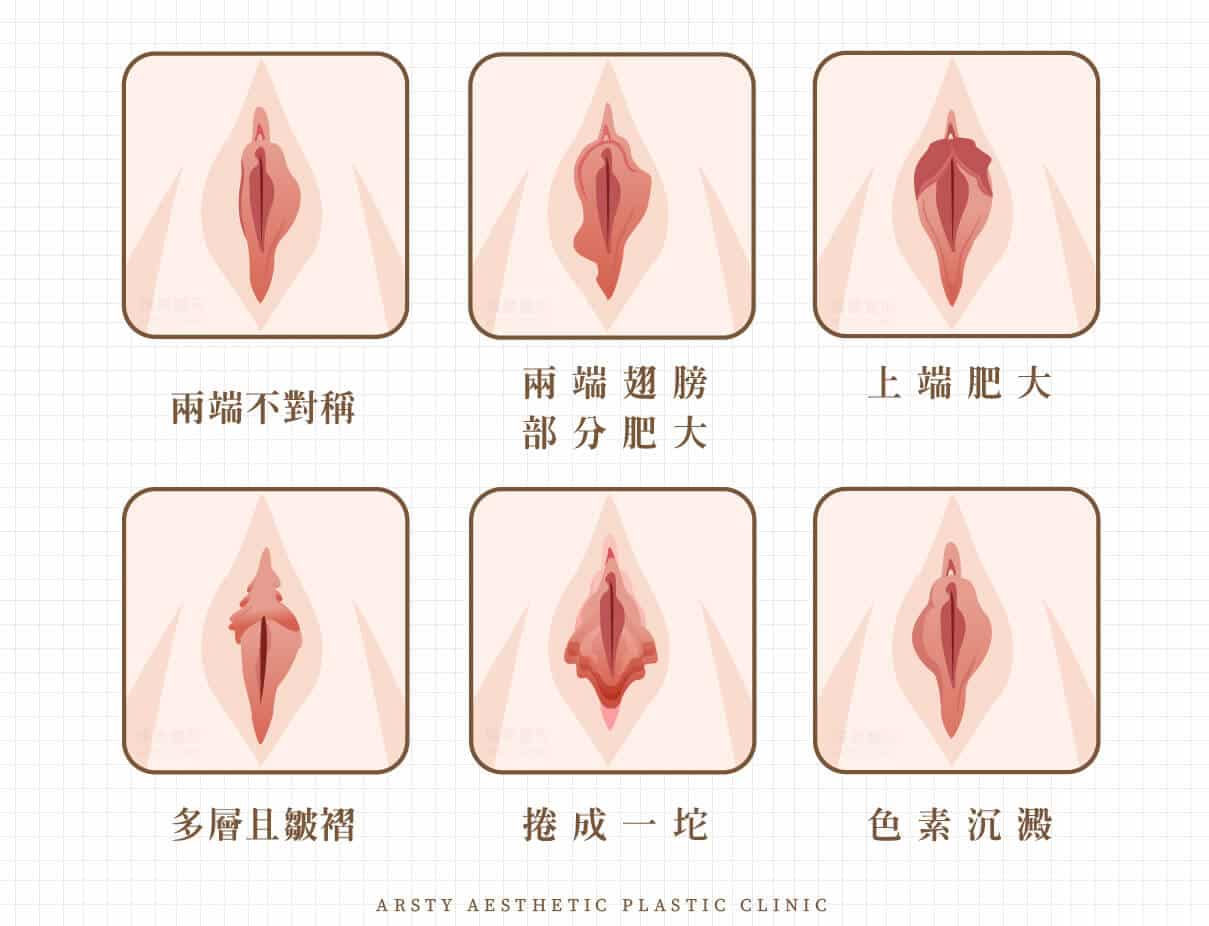
To address women's intimate area concerns, there are now highly advanced procedures available: "Labia Minora Reduction Surgery." Dr. Hsin-Yu Chen explains that labia minora reduction surgery is broadly divided into "wedge reduction" and "marginal reshaping." Marginal reshaping is the most common procedure, which removes excess material from the labia minora from top to bottom. The extent of removal is designed according to each individual's needs. The procedure is precise and features immediate hemostasis, with no significant thermal damage. It also minimizes damage to surrounding mucous membranes, nerves, and blood vessels, significantly reducing bleeding and shortening the recovery period considerably.
Many people worry that the scars will be noticeable during intimate activities after the surgery. However, the wounds from labiaplasty are hidden at the edge of the folds. There will only be some swelling and hardening during the initial healing process. After the recovery period, there is no need to worry about anyone noticing anything unusual.
▍How long is the recovery period after labiaplasty? When can I resume sexual activity after the surgery?
Swelling is usually more noticeable two or three days after the surgery. Slight bleeding is also normal and there is no need to worry too much. During the recovery period, avoid activities such as weight-bearing, soaking in hot springs, swimming, cycling, and spinning. You can try stretching exercises such as yoga after two weeks. It is recommended to wait a month before engaging in sexual activity.
In addition, during the recovery period, it is necessary to keep the private area clean and wear loose and breathable clothing. If there is significant bleeding, panty liners can be used. However, it is essential to change sanitary products frequently to prevent infection.
(>>Popular surgical treatments for intimate areas - PRP, autologous fat grafting)
Can labiaplasty improve vaginal laxity? What are some methods to increase vaginal tightness?
Labiaplasty primarily aims to improve the appearance of the genital area, while vaginal laxity is an internal issue. Below are three common methods for vaginal tightening:
- Non-invasive treatment: There are many non-invasive vaginal tightening treatments available, with the "VOTIVA Butterfly Radiofrequency" being a common choice. This device uses wide-range radio waves to penetrate deep into the vaginal tissues and heat them. The thermal effect promotes blood circulation and collagen production in the submucosal layer, increasing the thickness of the vaginal walls and making the vagina tighter.
advantage:This full-layer vaginal care procedure requires no anesthesia, is slightly warm and painless, leaves no wounds or recovery period, and does not affect daily life. It can be used by people with different degrees of vaginal laxity.
shortcoming:Because everyone's collagen production is different, the results will vary from person to person.
- Mesotherapy: Extracting autologous growth factors, such as high-concentration plasma platelet-1,000 growth factor (PRP) from blood, and injecting it directly into the vaginal mucosa to stimulate deep collagen proliferation, enhance local blood circulation, improve nerve ending sensitivity, and restore the plumpness and health of the vaginal mucosa.
advantage:It provides full-layer vaginal care with minimal invasiveness, and the use of autologous tissue eliminates the risk of rejection.
shortcoming:There will be small wounds at the injection site, and the healing period is one to two days. However, the effect varies from person to person depending on individual collagen production.
- Vaginal tightening surgery: First, some of the loose vaginal tissue is removed, and then the vaginal opening is sutured to make it tighter.
advantage:It shows significant improvement in individuals with more severe relaxation.
shortcoming:Anesthesia and surgery are required, followed by a significant recovery period.
Dr. Hsin-Yu Chen mentioned that due to advancements in biotechnology, non-invasive treatments are currently more common. This is because most problems stem from epithelial cell atrophy of the vaginal mucosa, collagen loss, abnormal pH levels, and lack of nutrient sources for glycogen and beneficial bacteria in the intimate area. These symptoms can be addressed by using the thermal effects of lasers or radio waves to activate the metabolism and regeneration of tissue cells and the proliferation of collagen. In particular, the thermal effects of butterfly radio waves penetrate deeper. Some people also combine this treatment with growth factors, which are injected into the vaginal opening or clitoris, essentially delivering vitamins directly to these areas to enhance cell activity.
✨Arsty Clinic | Specializing in jaw reduction, facelift, liposuction, and rhinoplasty✨
- A seasoned plastic surgery expert, providing one-stop medical aesthetic services for a flawless, one-time beauty experience -
▍Appointment/Consultation: 02-2771-8080
▍Arsty Clinic Official Website:https://arsty-clinic.com
▍Arsty Clinic Fan Page:https://www.facebook.com/arstyclinic
▍Arsty Clinic IG:https://www.instagram.com/arsty_clinic
▍Dr. Wei-Cheng Ching's Instagram:https://www.instagram.com/drchingwc
▍Line:https://line.me/R/ti/p/%40jep6646y
▍Contact us via WeChat ID, please join our official WeChat account↓

The effectiveness of the treatment varies from person to person; it is recommended to consult with a doctor before the procedure.


